David Hockney at the Portland Art Museum
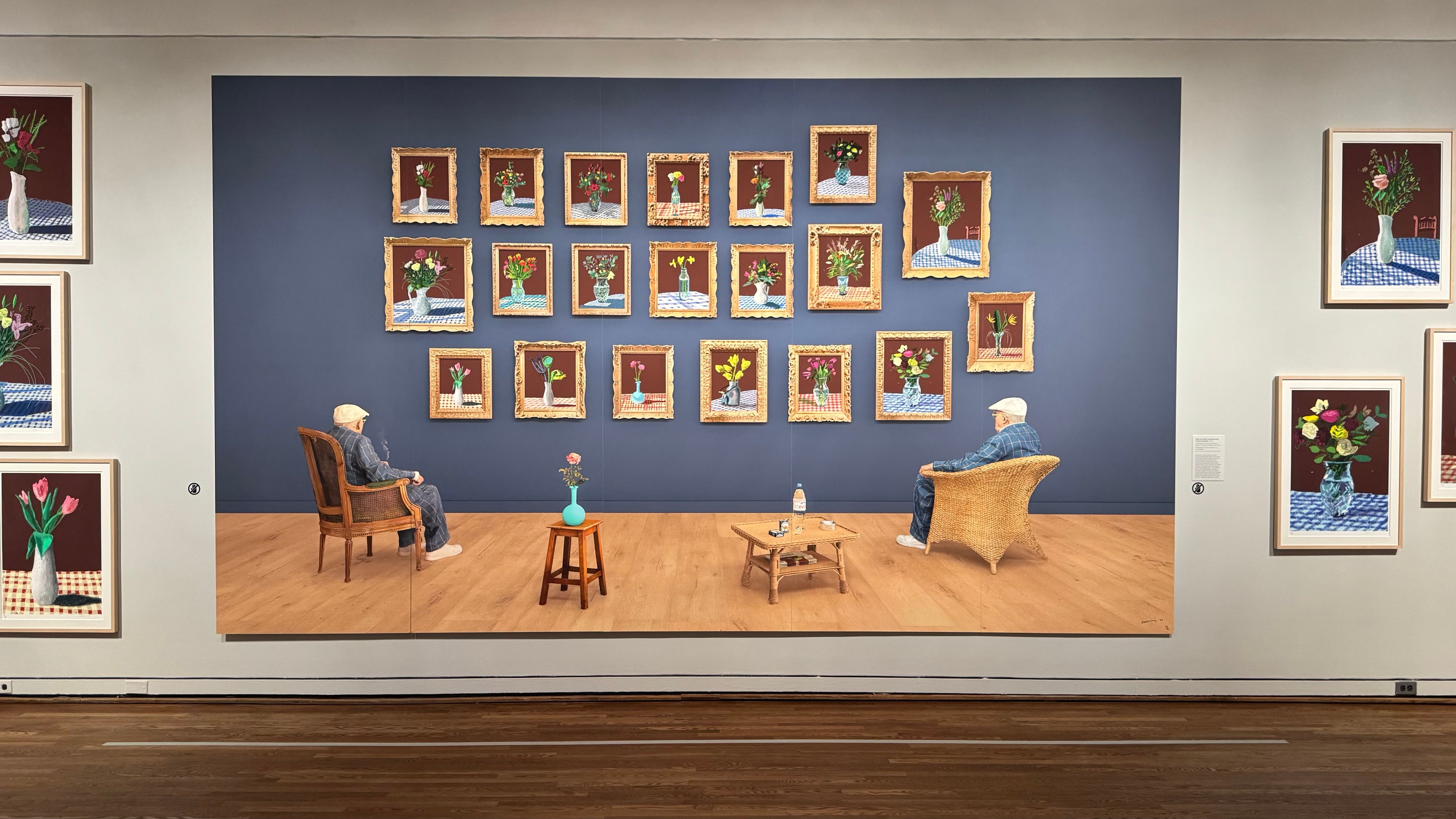
I started tinkering with computers pretty late. I had a used Commodore64 when I was a kid, purchased from a yard sale. I wrote some silly 10 PRINT “POOP”; GO TO 10 programs but mostly it was a video game machine. During my last full year of art school I took a computer aided design class and plonked around in Adobe Photoshop on Apple Macintosh Quadra computers. I began playing with printers then. I remember creating a small, 8” x 10” swirly abstract paint study on a canvas board. I scanned the little painting. I printed it in color and black and white. I photocopied the painting. I took the scan into Photoshop and ran a half-tone screen filter over it, creating a knock-off Roy Lichtenstein version. Then I took all of these prints to my local Kinko’s copy shop and had them spiral bound together with a cardboard cover. I glued the original painting to the front.
At Kinko’s they had a giant photocopier. 18” x 24” inches. A huge slab of glass suspended over a cavernous machine. I created an 18” x 24” painting of my buddy scraping on a wall with a big drywall trowel. I took the painting to Kinko’s and photocopied it. Neat. A black and white version of my painting spat out of the machine. Next I tried some poster paper they had loaded into the machine. Same image, now on color! I came prepared. I fed a sheet of printmaking paper into the machine. This looked good. Like a wood block print almost, but instant. Now I was cooking. I tried feeding a sheet of watercolor paper through the machine. It jammed. I sat on the floor of the Kinko’s, disassembled the machine, wrenching the ruined paper out. I put the machine back together, paid for my prints, and left. The sleepy college kids working behind the counter didn’t notice or didn’t care.
Later, during graduate school, when I was making big ink jet prints, or transferring big inkjet prints to watercolor paper with an etching press, calling it art, and then arguing with my professors about whether it counted or not, I discovered David Hockney’s work.
I knew about Hockney’s famous swimming pool paintings. In my history classes they aligned Hockney with late pop art. This wasn’t wrong but it wasn’t right either. His work was figurative in a world of abstraction, and at the time that meant “pop”. Any other classification would disrupt the grand historical narrative of art history.
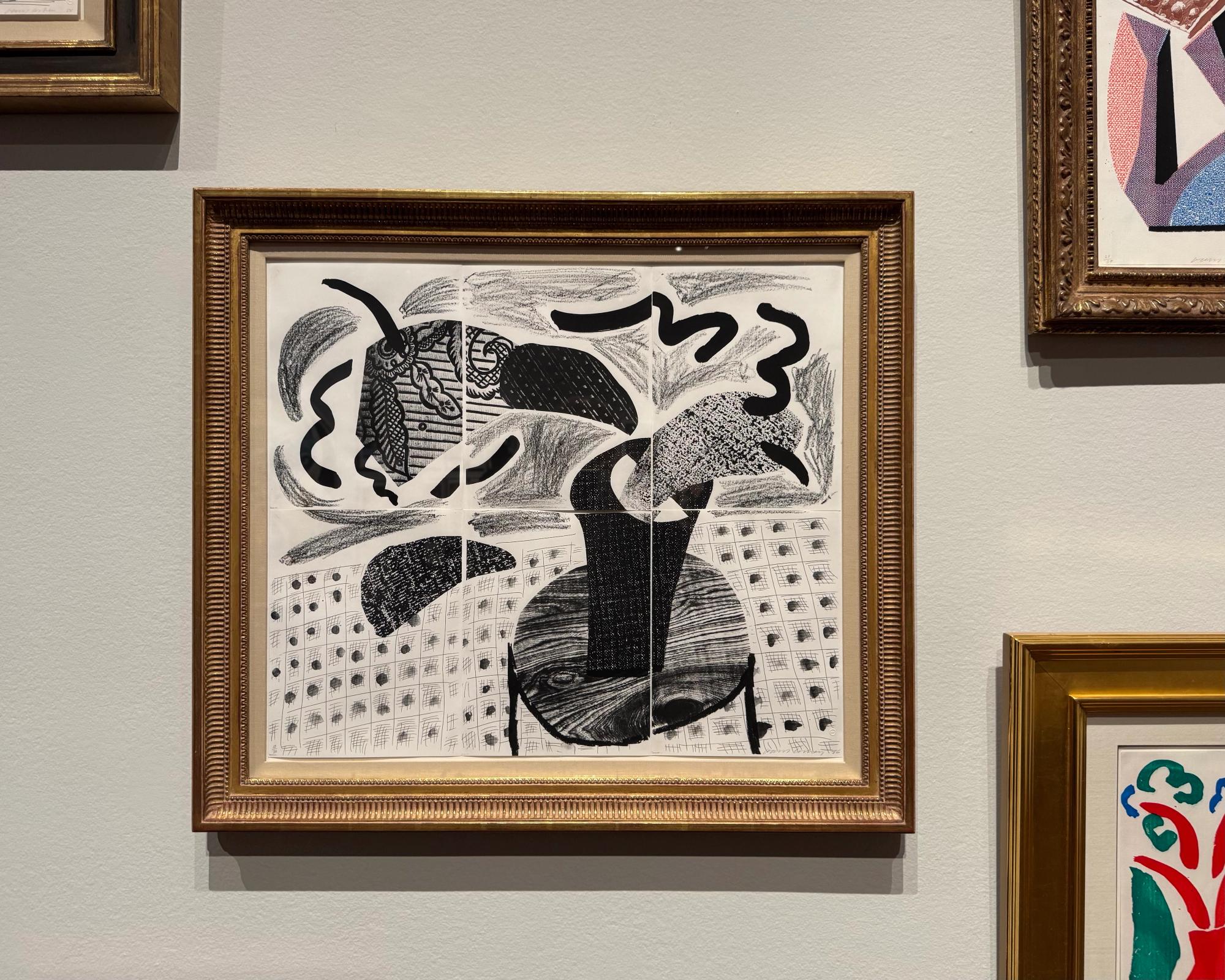
I discovered that David Hockney started making art on computers in the 80s. I learned that he made art with fax machines. He break up an image into a grid of rectangles, and fax each one separately, to be reassembled into a large print somewhere else in the world. Hockney used Xerox machines(!) like a printing press. He would run paper through multiple times, changing toner cartridges to achieve different color effects. I was elated. For one, now that I had significant art historical precedent I could shut down any arguments about computers and art from tired faculty members. I also found a new hero.
The David Hockney exhibition at the Portland Art Museum features a lot of work from this later, more experimental period of his life and career. In a way, it’s the best printmaking show I’ve ever seen.
Intimacy and innovation
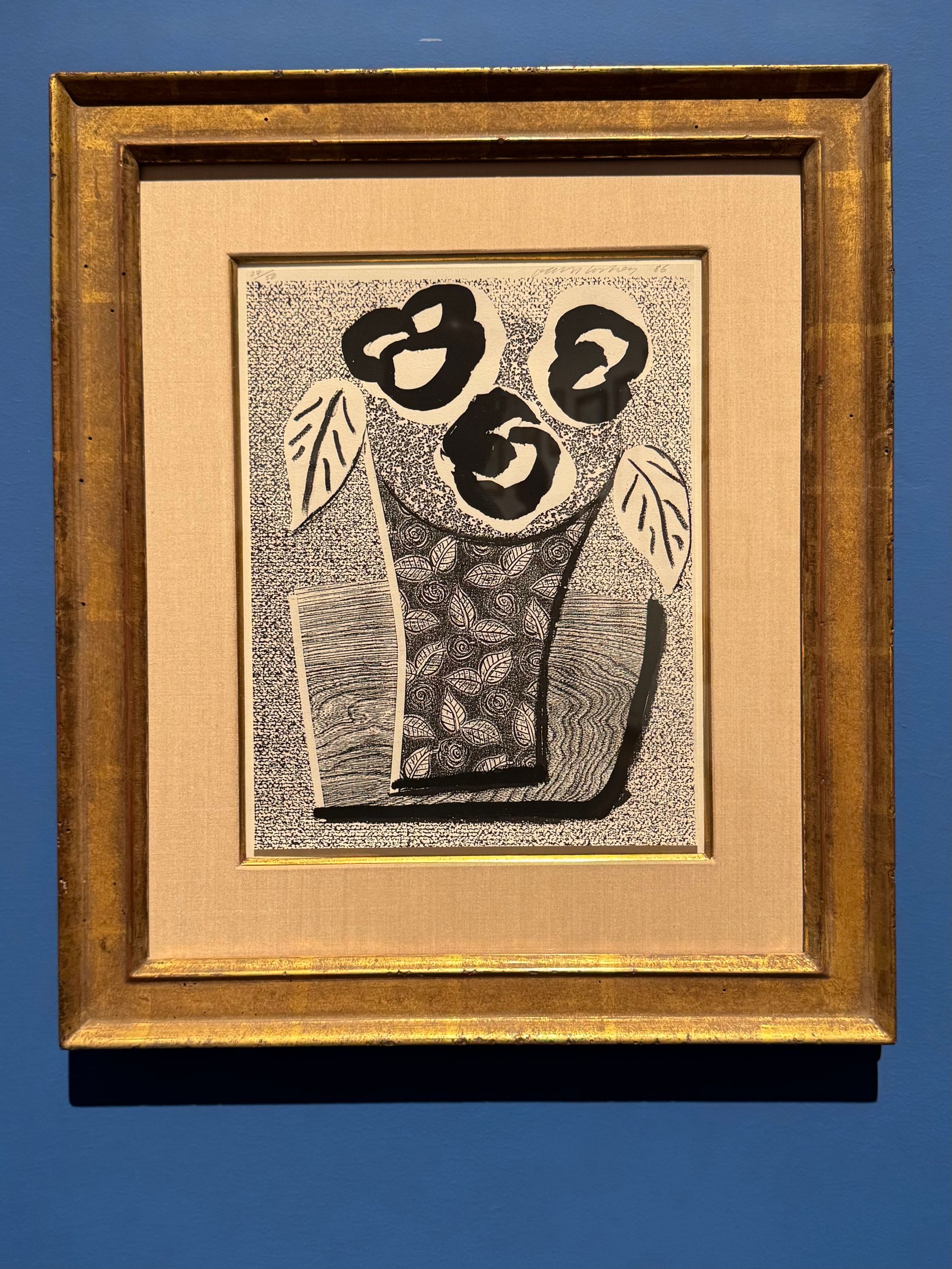
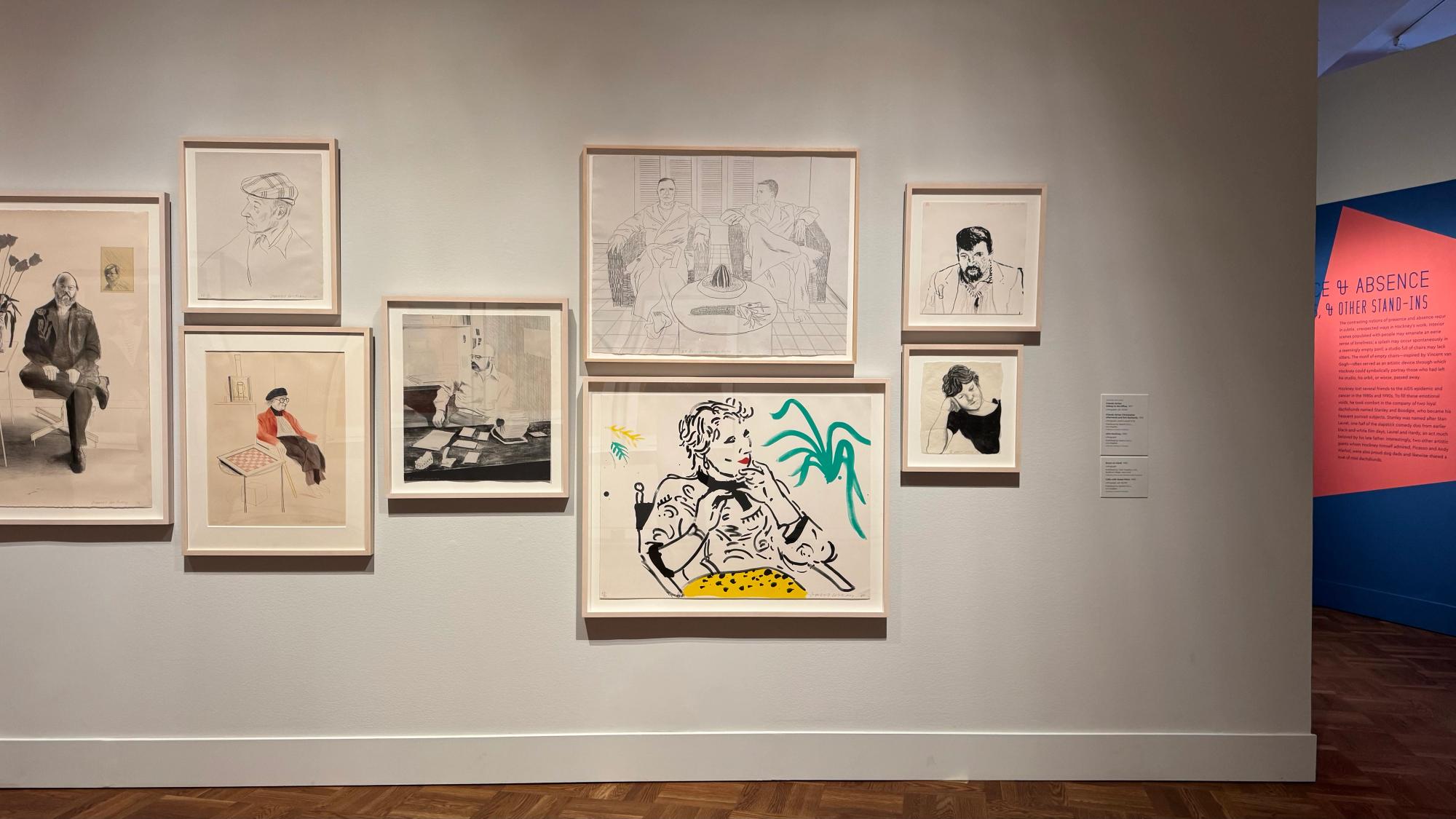
The exhibit at PAM includes many of Hockney’s Xerox prints, some photographic drawings (basically Photoshop creations), some of his famous photo and Poloraid collages, as well as a number of conventional etchings and prints. The stand-out images, for me, are the luxurious iPad paintings.
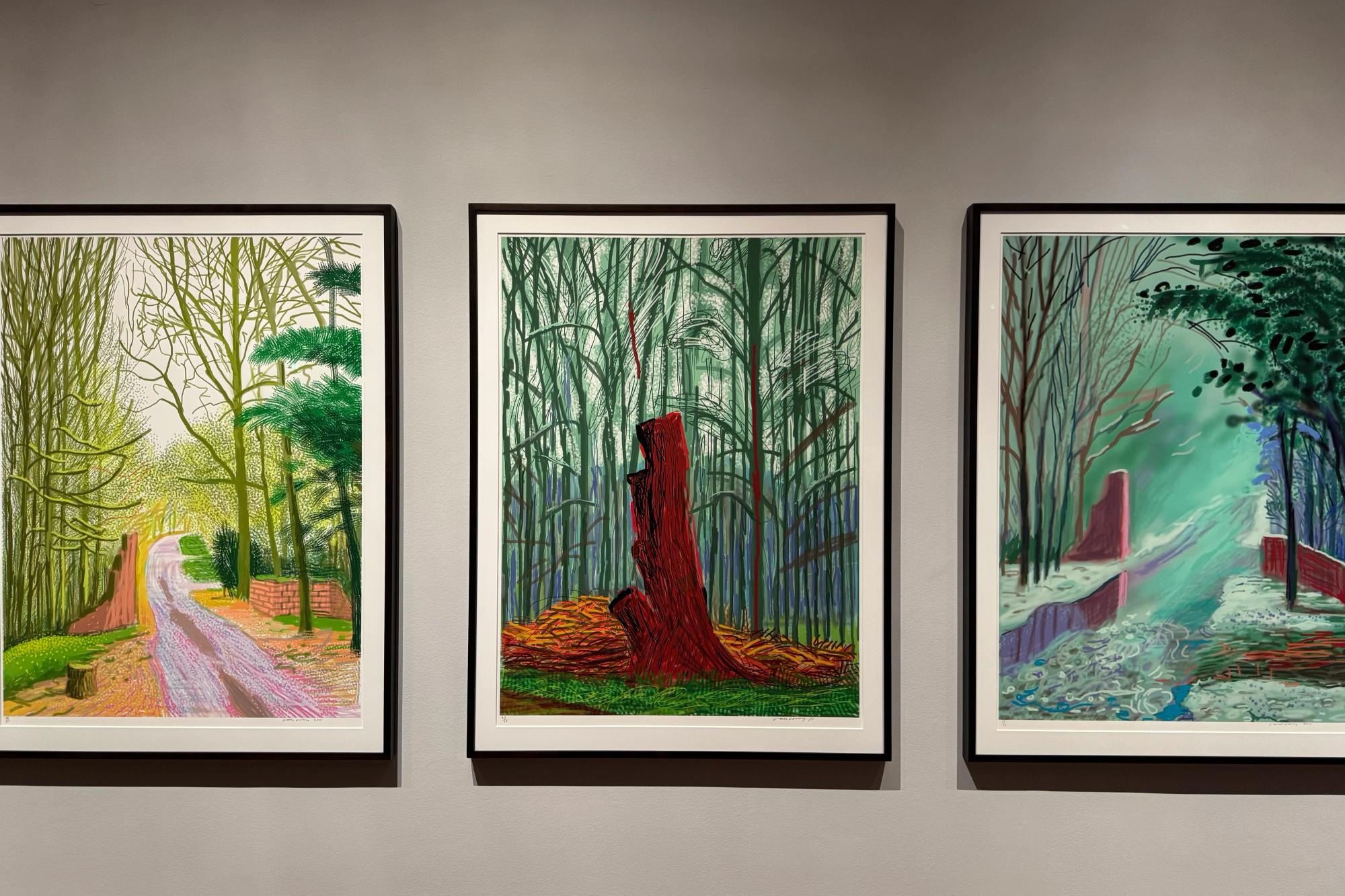
Printed at huge scale, these images cover a wall and fill your view. That’s a feature of digital imaging that I find very interesting, and that art critics ignore. Dimensions are variable and infinite. A single iPad painting can exist directly on the 12” screen of an iPad. It can appear on your phone, as a little square on an Instagram feed. It can be a billboard. It can be projected and fill a room. By being virtual an iPad painting surpasses Greenbergian “flatness” becoming an idea floating in space.
But art must be collected, so these digital images are printed beautifully on very large paper in very small numbers to make the infinitely reproducible precious. The printing is amazing - the colors pop in a way that I find surprising. Hockney’s press achieves vivid greens that I didn’t think were possible in print.
When David Hockney first began painting on an iPad, he used the app “Brushes”. But the app got updated (as they do) and Hockney no longer liked it. He liked the immediacy and simplicity of the original app, and they went and made it complicated. So he worked with a mathematician friend to create his own app.
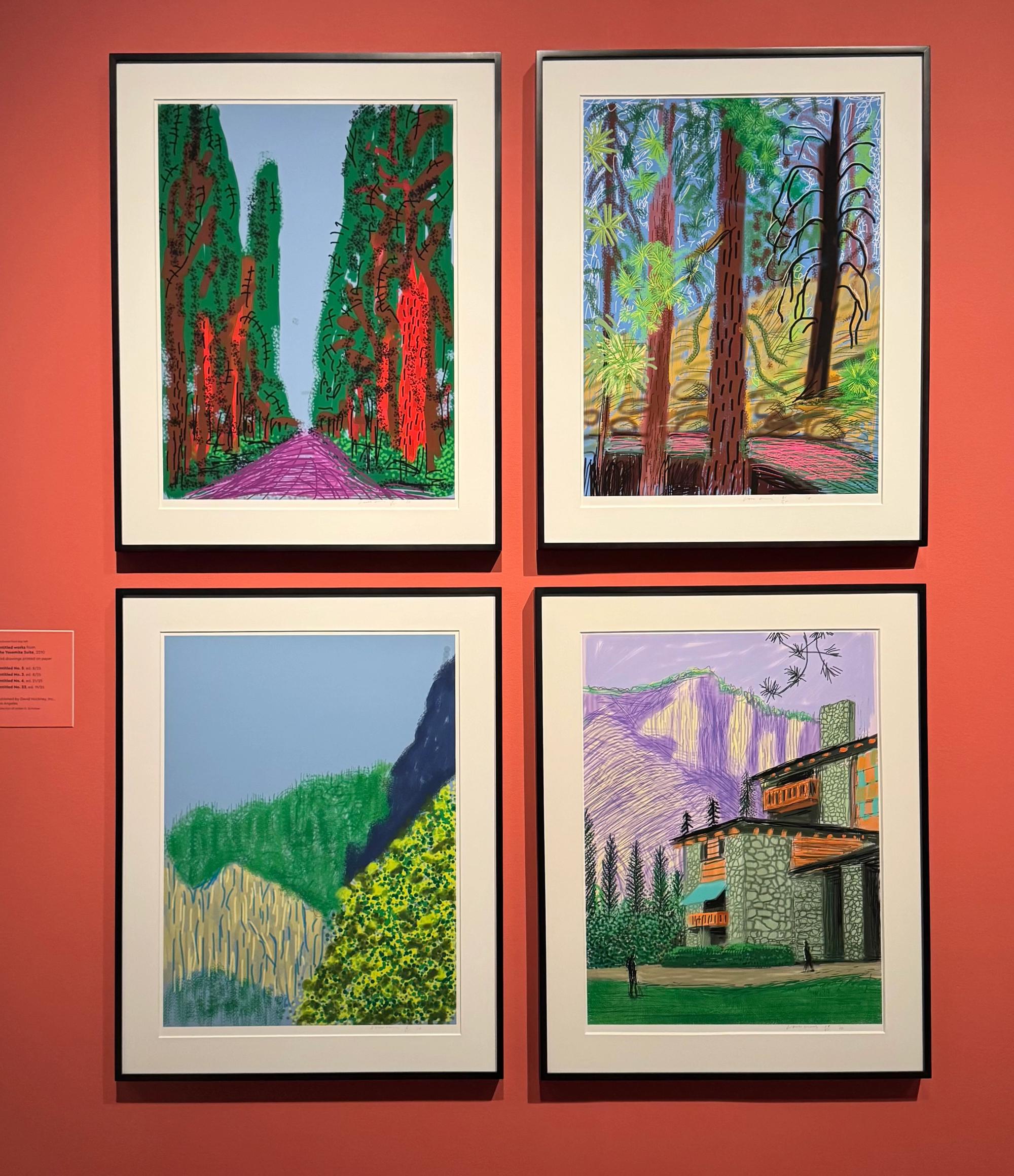
Some of these images are singular vast compositions. Landscapes painted in Yosemite, his garden in Normandy. Some are grids - several individual paintings at slightly different angles, composed together in a large print. These call back to his photo collages and earlier experiments with copiers and fax machines.
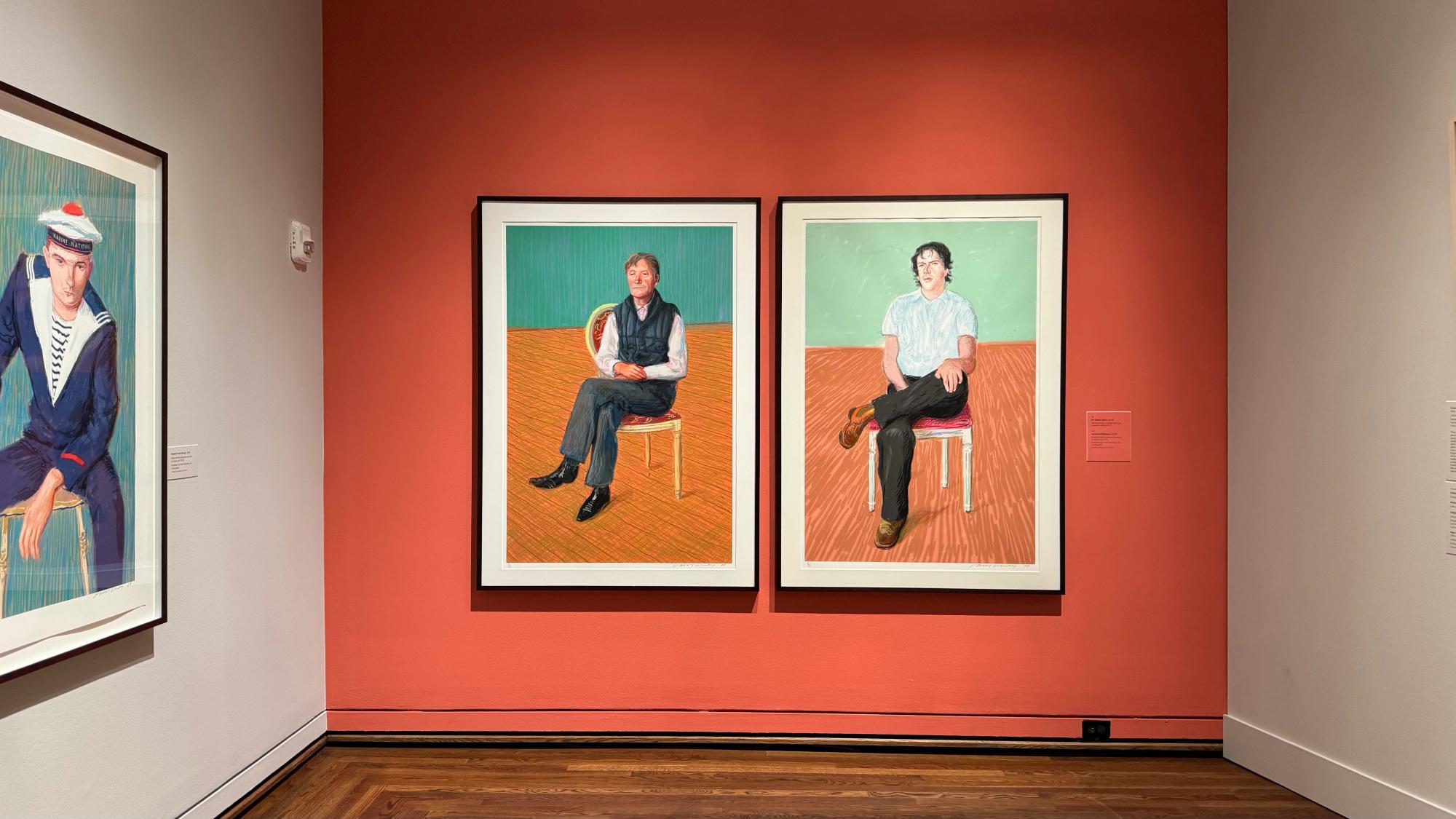
Hockney always embraced technology, or at least the parts he could use to make art. He seemed always interested in finding new ways of seeing and new ways of looking. He was a good modernist in that way. Hiis subject matter was often intimate, personal, and approachable. His portraits of friends, family, and lovers are touching but energized by the hyperreal iPad colors and frantic finger marks. His iPad paintings of his home in France create bucolic yearning for a simple, good life, puttering about in the garden before the rain comes.
Passing
The timing of my visit to this exhibition became accidentally poignant when I learned of Hockney’s passing last week. Every museum I follow on Instagram had something to share about Hockney and his amazing career. I’ve seen fans of bad decisions crowing about Hockney’s life-long cigarette habit (and how he outlived several of his doctors). I shared an an impromptu art history lecture and tribute onto my company’s “random” Slack channel.
This isn’t true of course, Hockney’s work will be shown for years and years, but I feel like I caught this exhibit just in time. There’s a special feeling of anticipation in seeing the work of a great living artist. The excitement of “wow what’d next?”. I’m glad I got to see this show with that frame of mind.
Subscribe
New work and writing, straight to your inbox.