Cloudy Mexico
I hope this is becoming a tradition. We took advantage of the long weekend to return to Guadalajara for a supposed sun-break. The rain gods followed our plane and bestowed clouds and scattered showers upon us.
We arrived early in the morning via Volaris, a budget airline which serves the US, Mexico, Central America, and South America. The seats are uncomfortable, but the flight from Portland is direct, and the flight attendants have amazing retro uniforms in bright purple. The flight announcements are made in Spanish followed by recordings in English.
GDL feels different this time. On our way through immigration a fancy robot turnstile scanned my passport, took my picture, and granted me a tourist visa. After we collected our bags and escaped through the giant frosted glass sliding doors into the international terminal we were greeted by a giant new Starbucks. There are shops and restaurants all around. Once there were only taxi stands and anxiously waiting families.
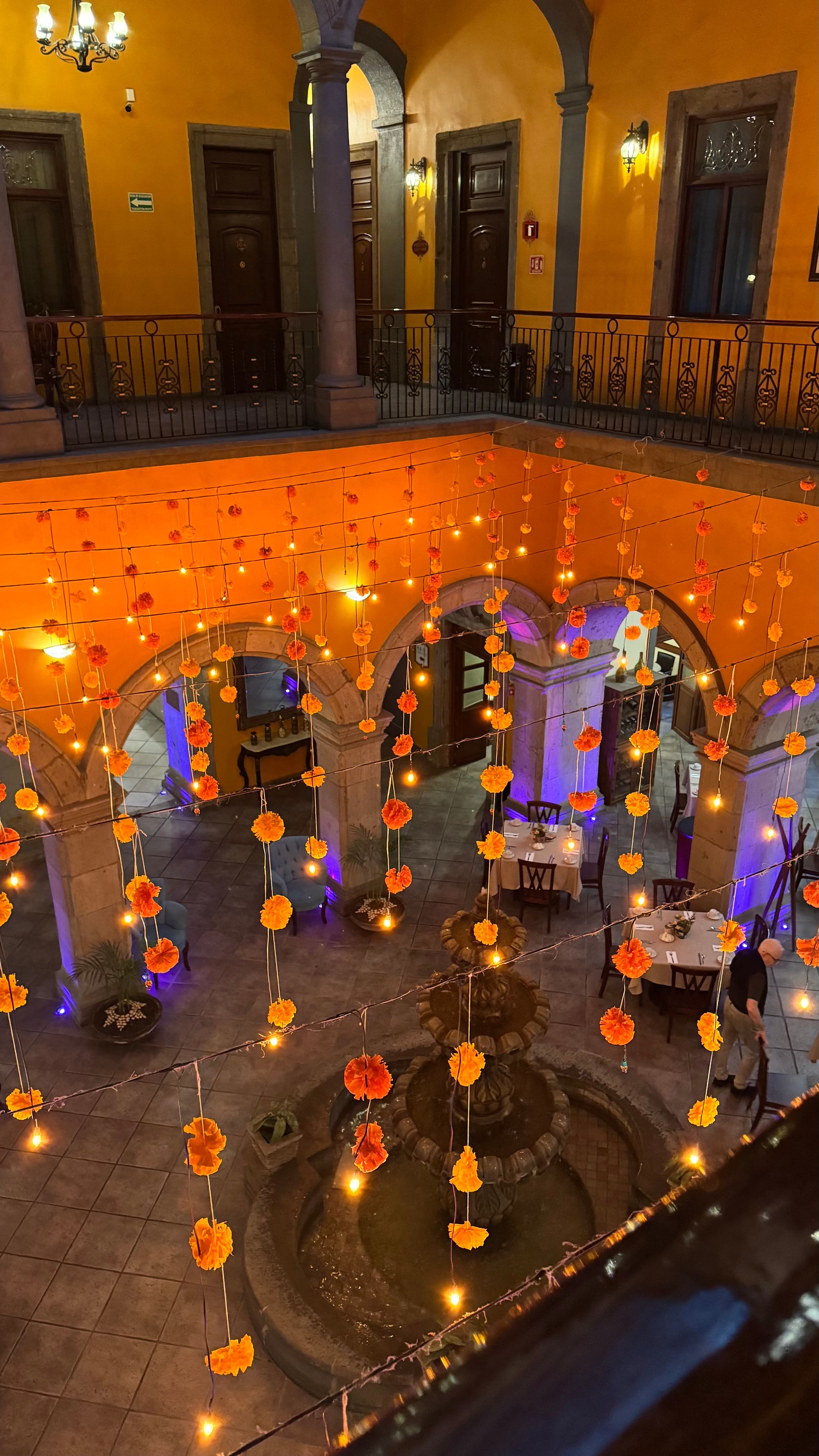
One of my wife’s old friends volunteered to pick us up. We bought her a latte as a thank you. She led us to her car, parked in a shiny new parking structure, and drove un into town. She dropped us at our hotel and we made plans for dinner later in the week. We checked into the Hotel Morales, dropped our bags in our room, freshened up, then ran back downstairs for breakfast. We sat by the courtyard fountain beneath string lights decorated with paper marigolds. Then back upstairs for a nap.
We woke and showered and made our way to the city center. Guadalajara is under massive renovation for the 2026 World Cup. Construction crews are everywhere, refreshing public infrastructure, widening roads, fixing this and that. It’s a huge overhaul to prepare for thousands of visitors. The central city feels transformed.
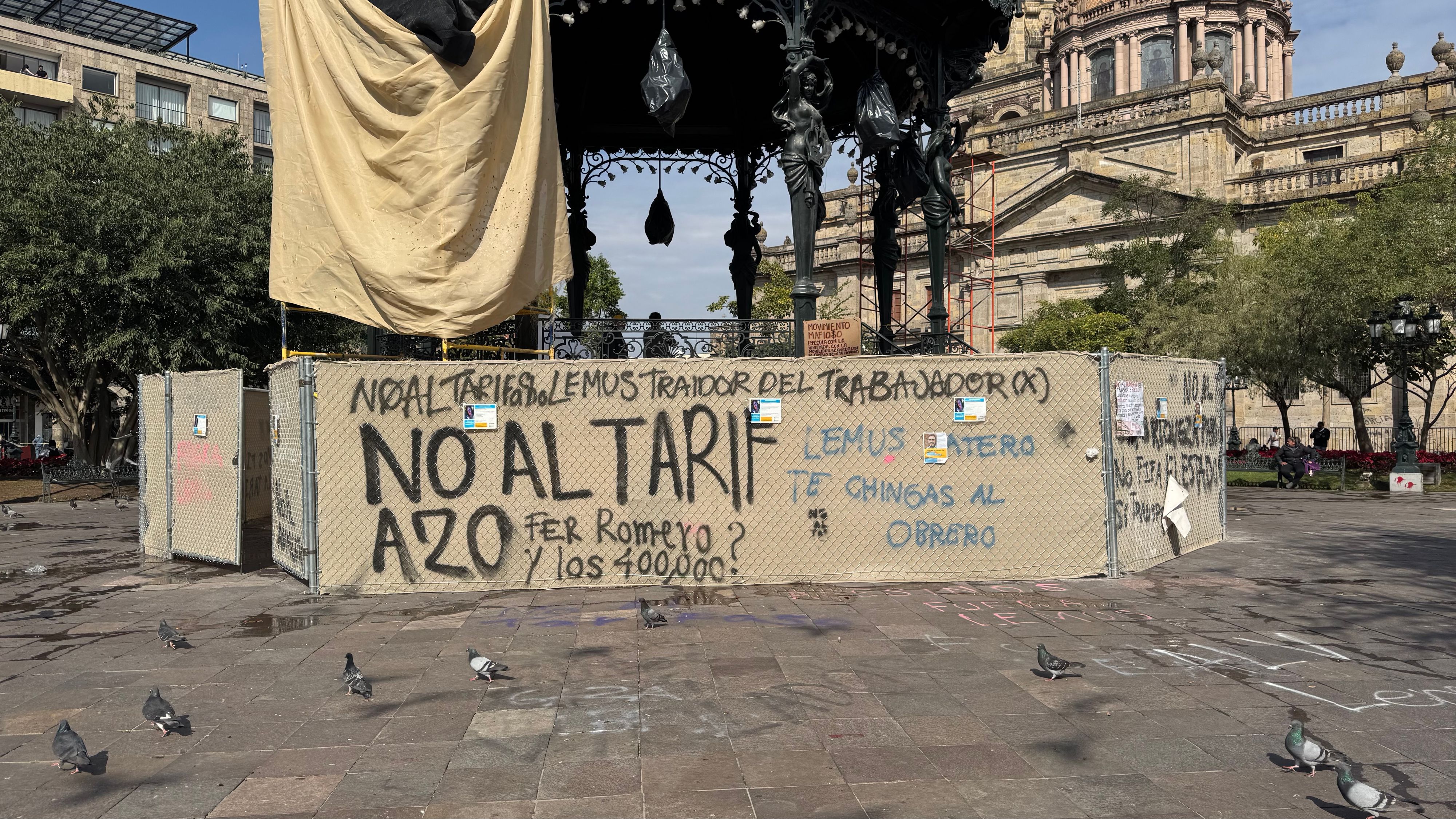
This transformation isn’t entirely welcome. We came to understand later that funds used to improve the city have been diverted to the renovations for the World Cup and away from other programs. Many people are angry and want to see basic necessities prioritized first. Bus prices were increased significantly to help raise funds for the effort. People are rallying and protesting in response. Additionally Mexico’s bombastic neighbor to the north has not been a good trading partner lately. Anti-tariff posters and graffiti cover walls and construction barriers.
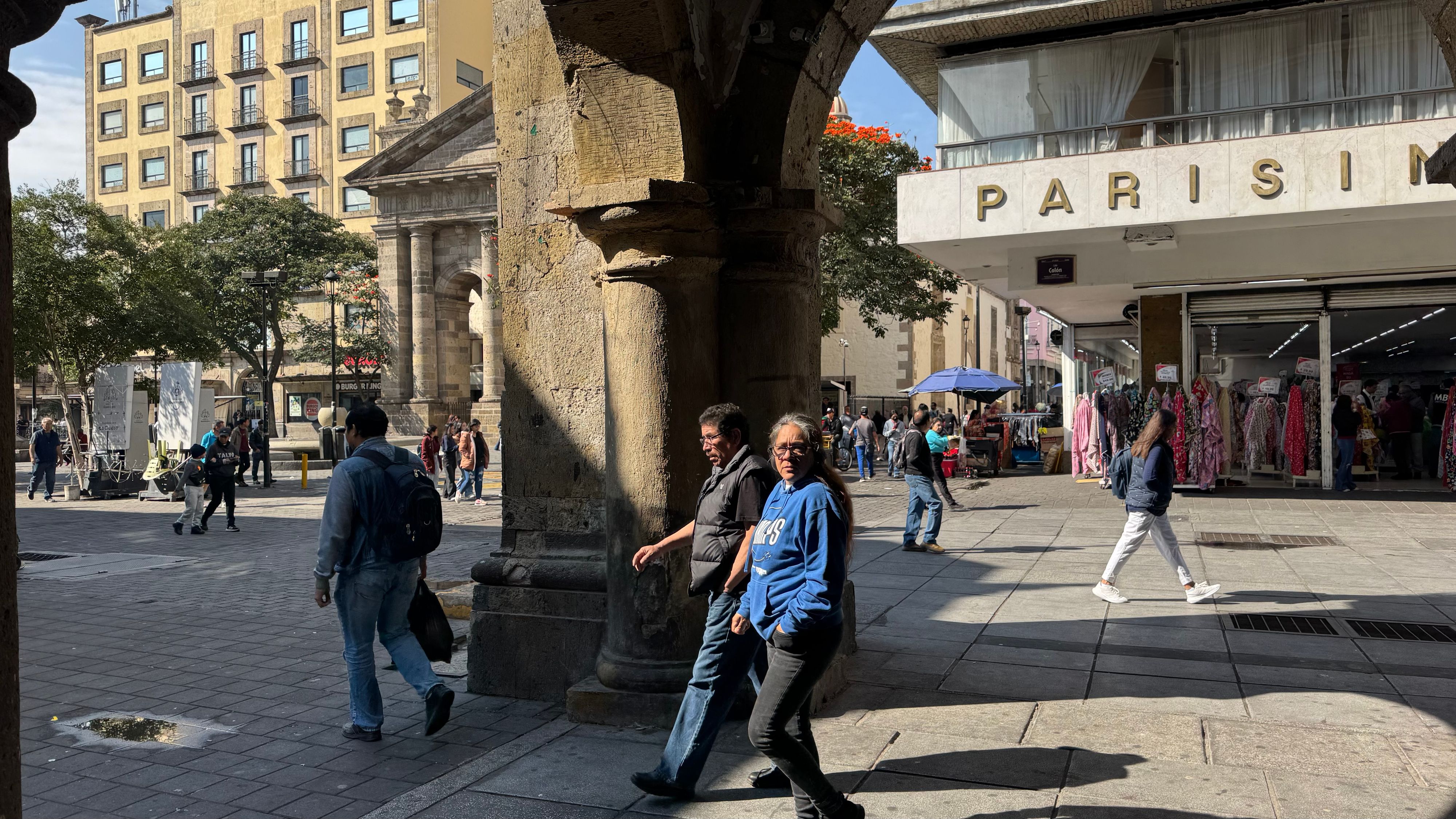
We found an iced coffee near Plaza Universidad and then found our way underground to the light rail station.
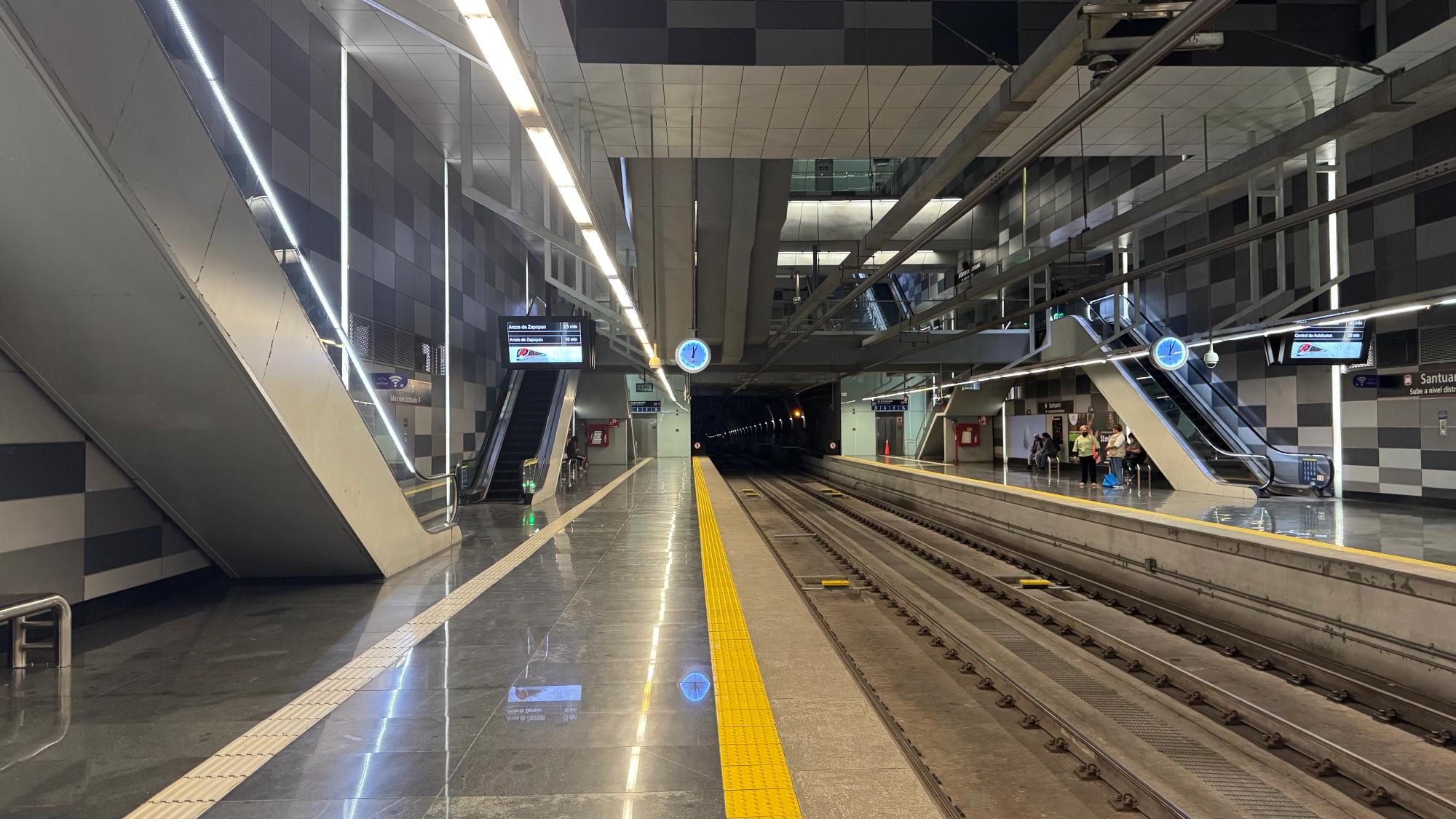
The light rail in Guadalaja is futuristic, shiny, and new, but it’s still easier to pay for the train with coins. A nice woman helped us decipher the ticket machine and swapped our paper pesos for coins. As our train arrives another train full of people coming to the center for weekend shopping arrives from the other direction. It’s mid-morning so we’ve missed the early morning throngs of commuters. The ride is quiet and smooth. Once you’re out of the center the underground train is suddenly above ground and you can take in great views of the sprawling city. We took the train out to Zapopan. The station is a big modernist rectangle that floats over the ground, held to the earth by stairs. It sits right outside the historic center of the city. A wide pedestrian boulevard leads to the plaza and the cathedral. Along the way more construction crews are making improvements. The concrete benches around the plaza have been broken up into chunks and removed into piles of debris as bright white, freshly poured benches replace them. We strolled around the center. I bought a straw hat to protect my balding noggin from the sun.
We caught a cab to my wife’s friends home. When she studied abroad here years and years ago, she became friends with the college age children kids in the neighborhood, visited often, and eventually became part of the extended family. The kids are all grown with kids of their own, some have emigrated to the US for work. The ageless matriarch of the family has prepared a giant lunch of tacos, nopal salad, roasted chiles, and stacks of corn tortillas. The youngest son introduced me to salsa chapulines - a smolderingly hot and spicy salsa featuring roasted crickets. The the roasted crickets are crunchy and savory, almost nutty, and the oily chiles sear my tongue, clear my sinuses, and move down my throat like a hunk of red-glowing charcoal. I went back for more. My wife shared the story of visiting Mexican friends in Puyallup, Washington, where I sampled the not-for-gringos-salsa and nearly died. I started to go for seconds that time too, but the host took it away from me to prevent injury and death.
The following day we met some of my wife’s friends for breakfast at restaurant called Chai. Chai is famous for their breakfast buffet with many flavors of chilaquiles. The four chicas met years ago when my wife was volunteering at Albergue de Frai Antonio Alcalde - which housed an organization which cared for mostly rural patients and families of patients at the main hospital in Guadalajara. An American equivalent might the Ronald McDonald house. Now they all have success, careers, and families. I tried to follow the conversation, picking up every 5th word in Spanish, but mostly drinking Café de Olla until my toes vibrated from the sugar and caffeine.
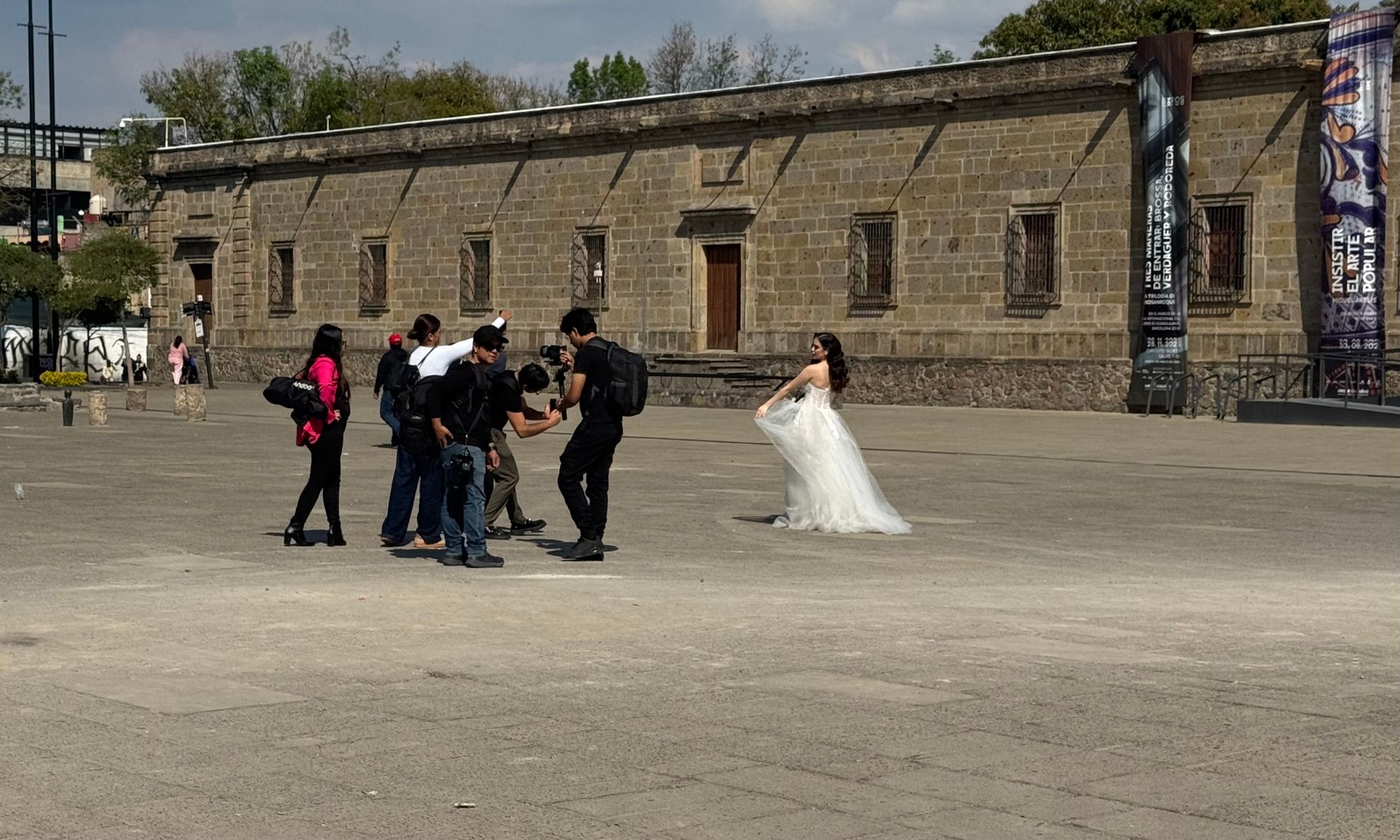
After breakfast, we made our way into the Museo Cabañas so I could pay a visit to the Orozco murals. More construction. The wide pedestrian boulevard that leads from the central plaza to the museum was barricaded. Vendors and foot traffic are diverted to either side on skinny makeshift walkways. Between the barricades I saw the big stone pavers upended revealing soil beneath.
When we arrived at the museum we saw a young bride-to-be posing for photos in the courtyard twirling and posing for her camera crew.
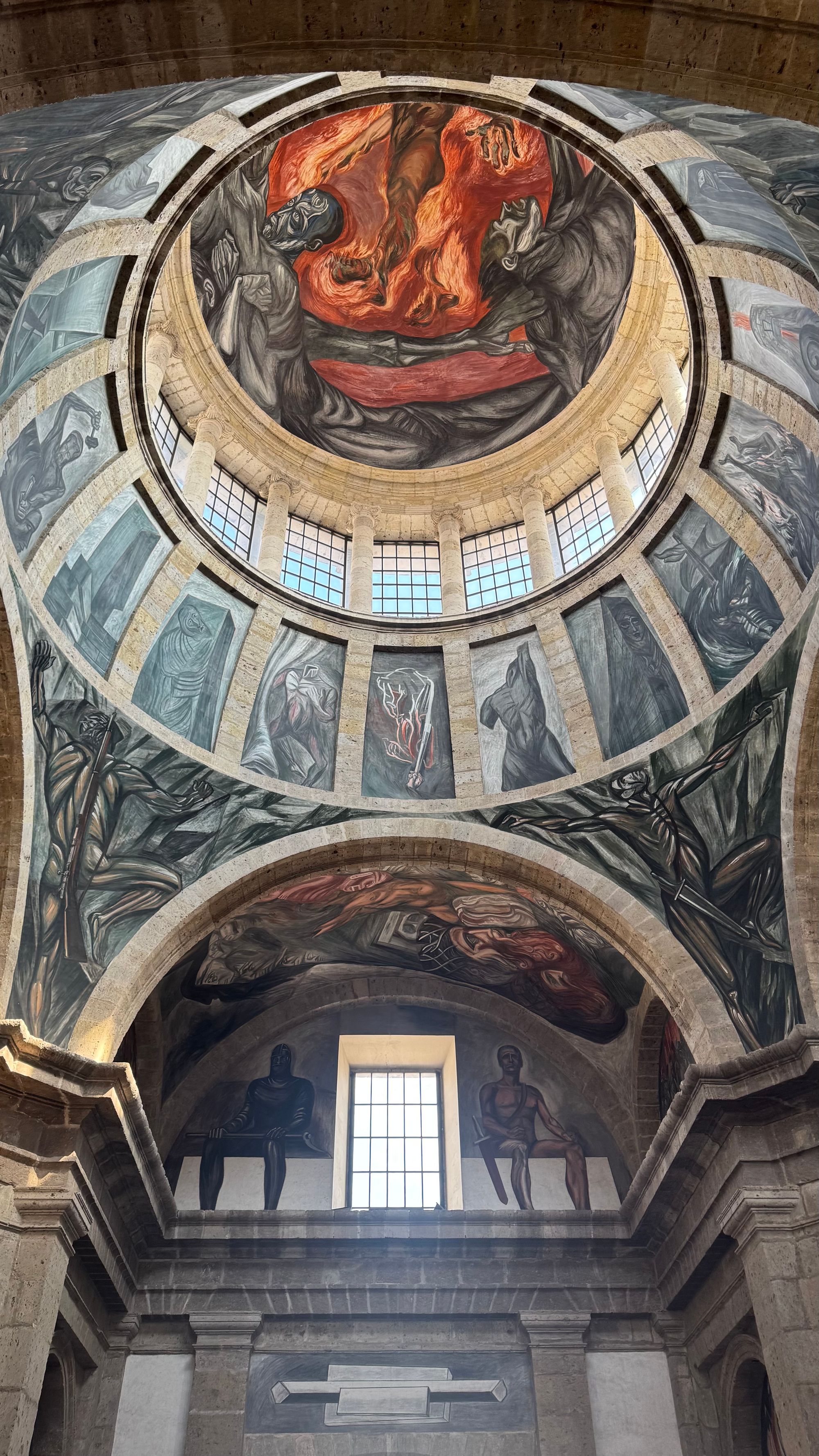
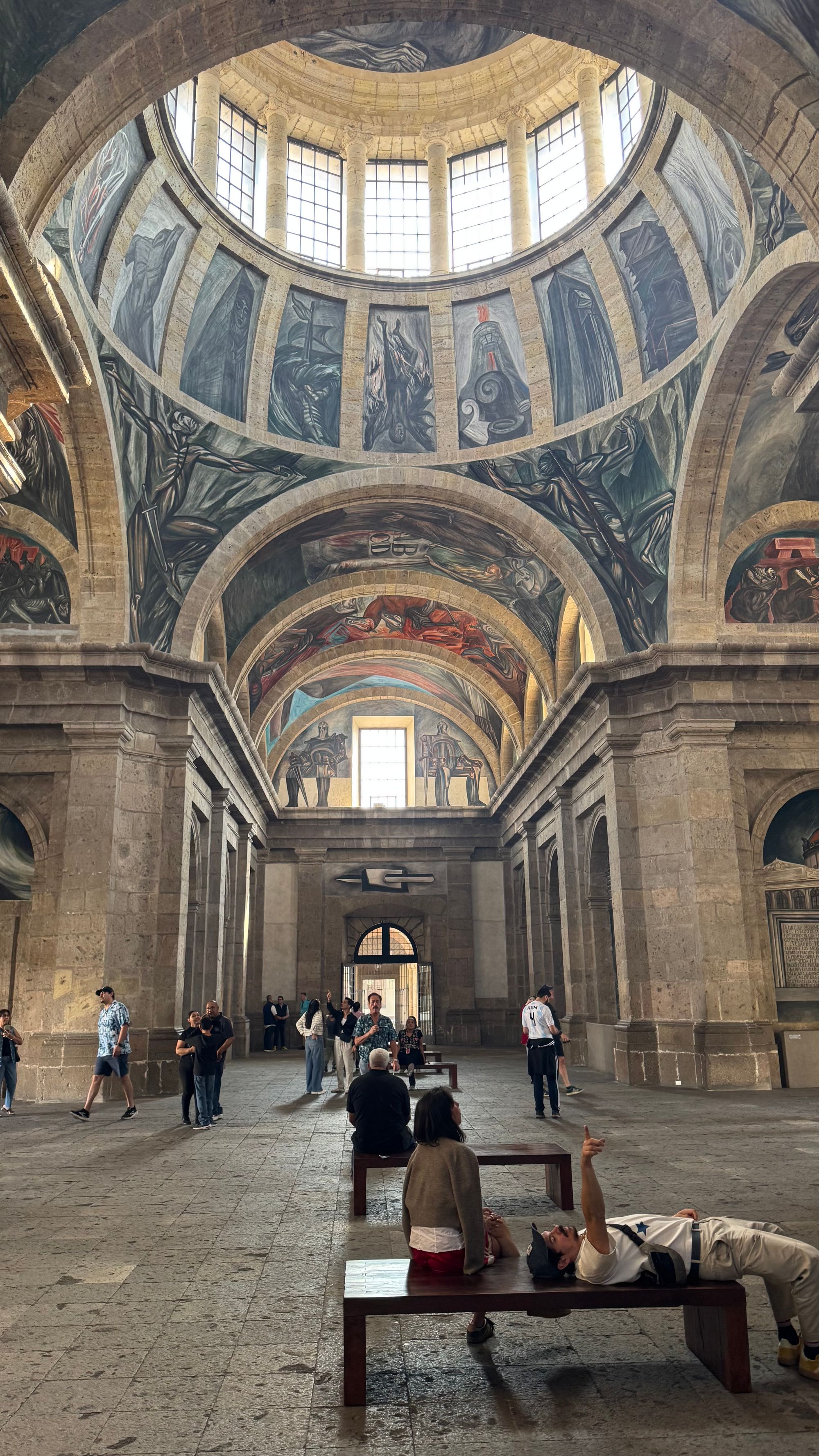
We stood under the domed ceiling craning our necks to look at Orozco’s frescoes. Tour groups came and went. Others laid down on the benches to get a better view.
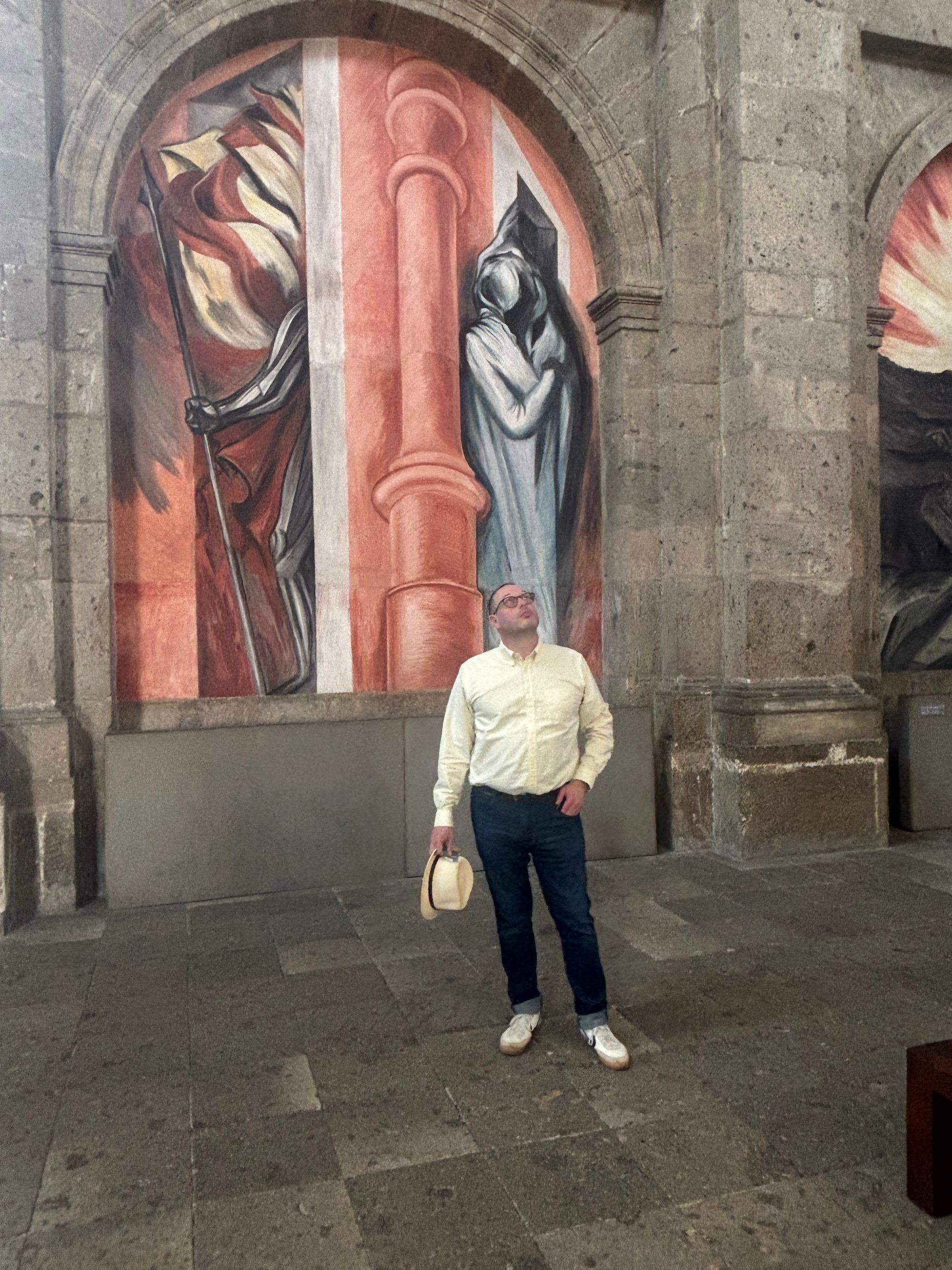
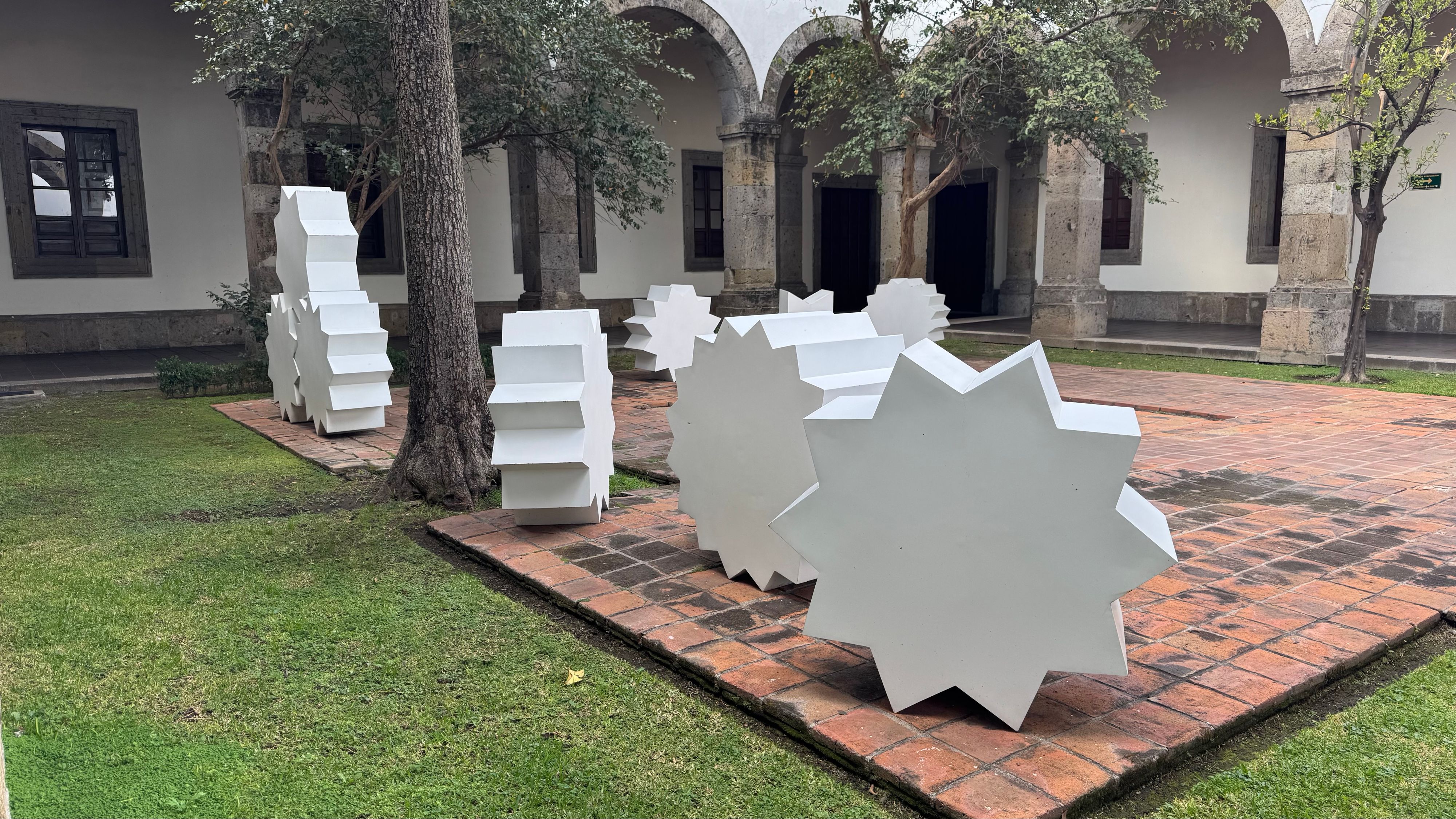
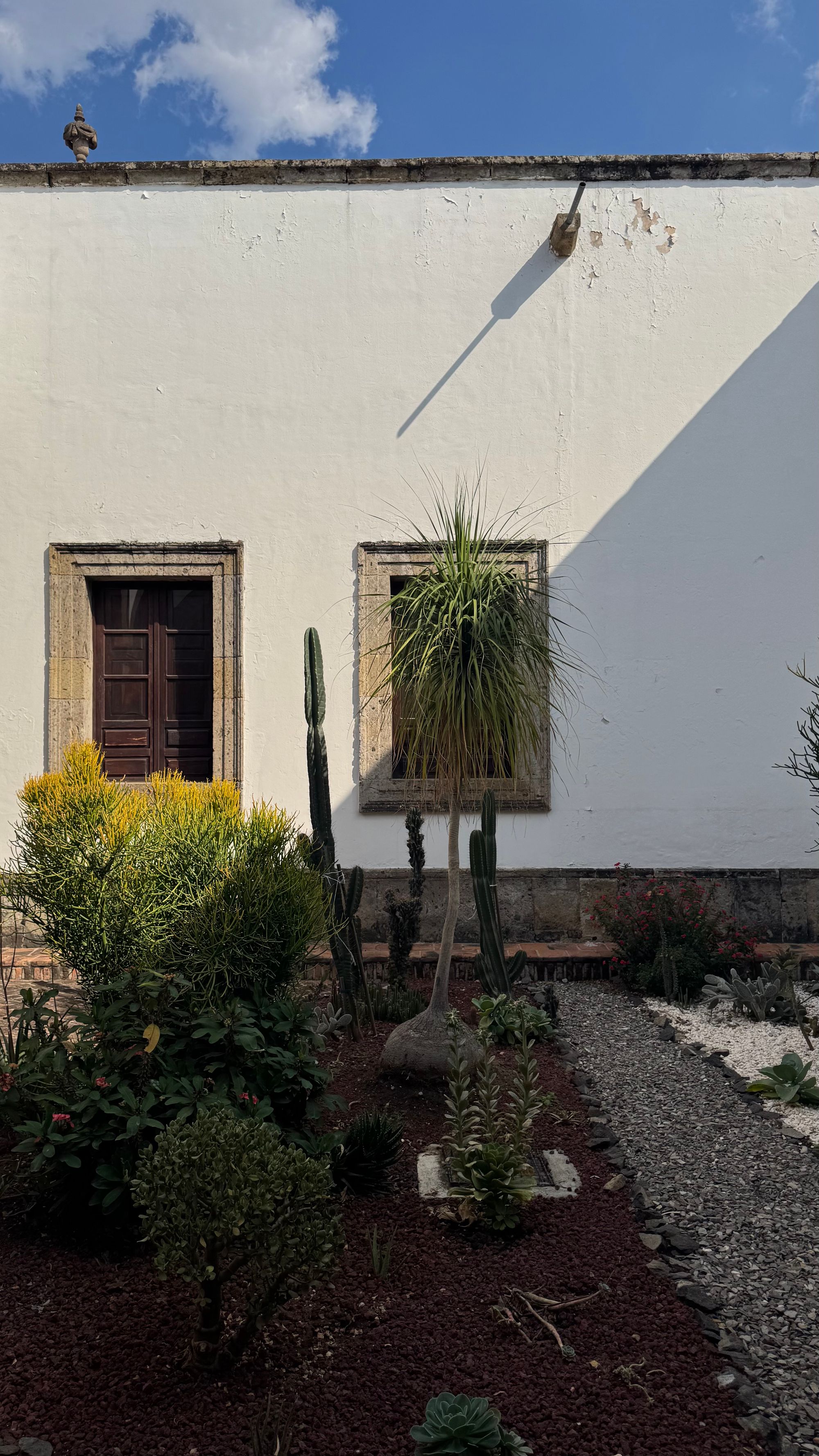
The rest of the museum is quiet. We strolled through the exhibits, but mostly just enjoyed the space. The museum, a former hospital, also a former government building is really a maze of corridors encircling courtyards. The rigid geometry of the place catches the sun and the sky in neatly framed vignettes.
The next day we left the hotel to find a great 1970s diner called Café Madoka. 5 decades of old men sit with drink coffee and a cigarette and read the newspaper. Today there is no smoking and the newspaper is replaced with a smartphone. I ordered, quite well I might add, huevos divorciados - divorced eggs - two sunny-side up eggs, one swimming in red chile, one in green chile.
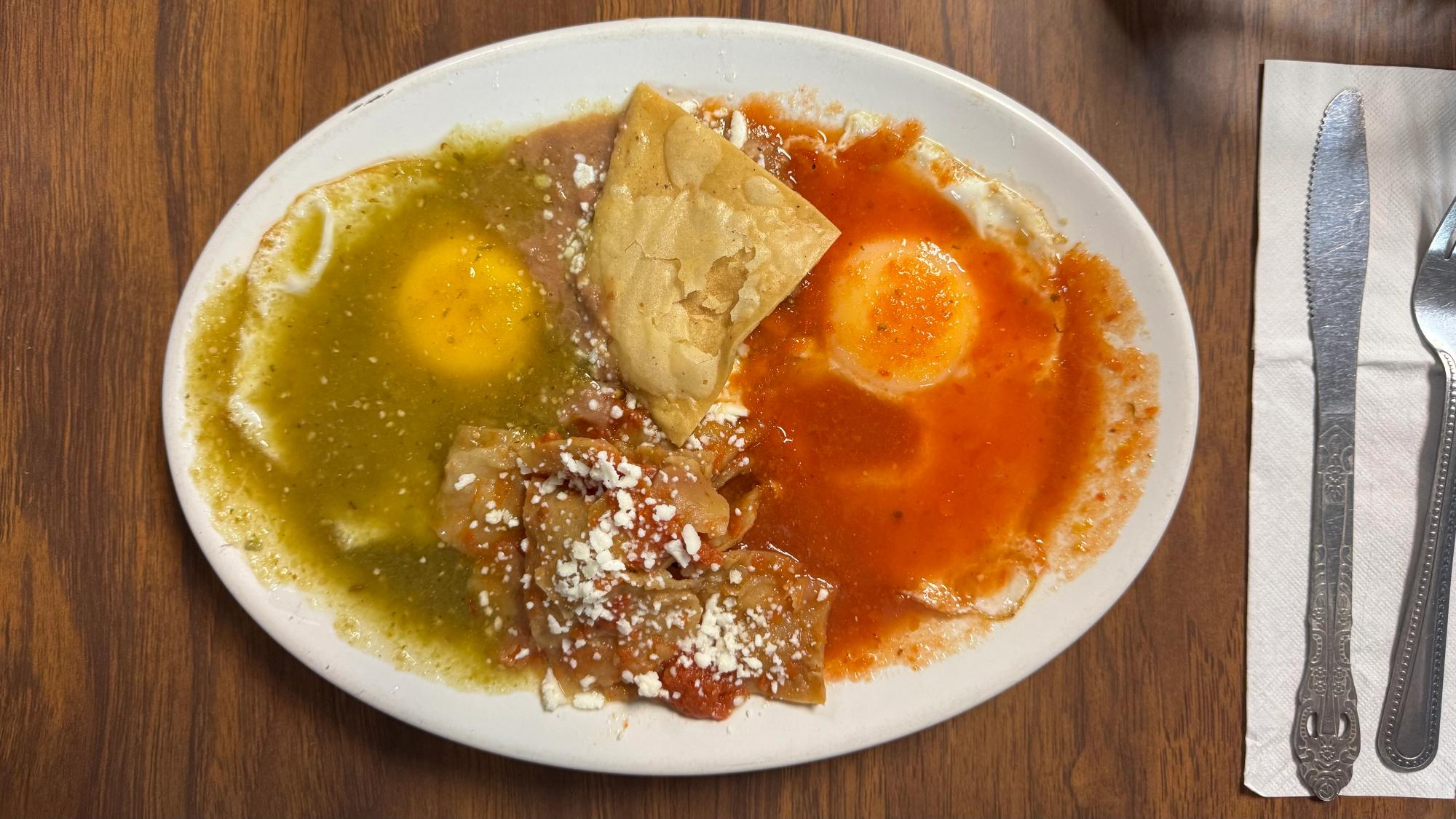
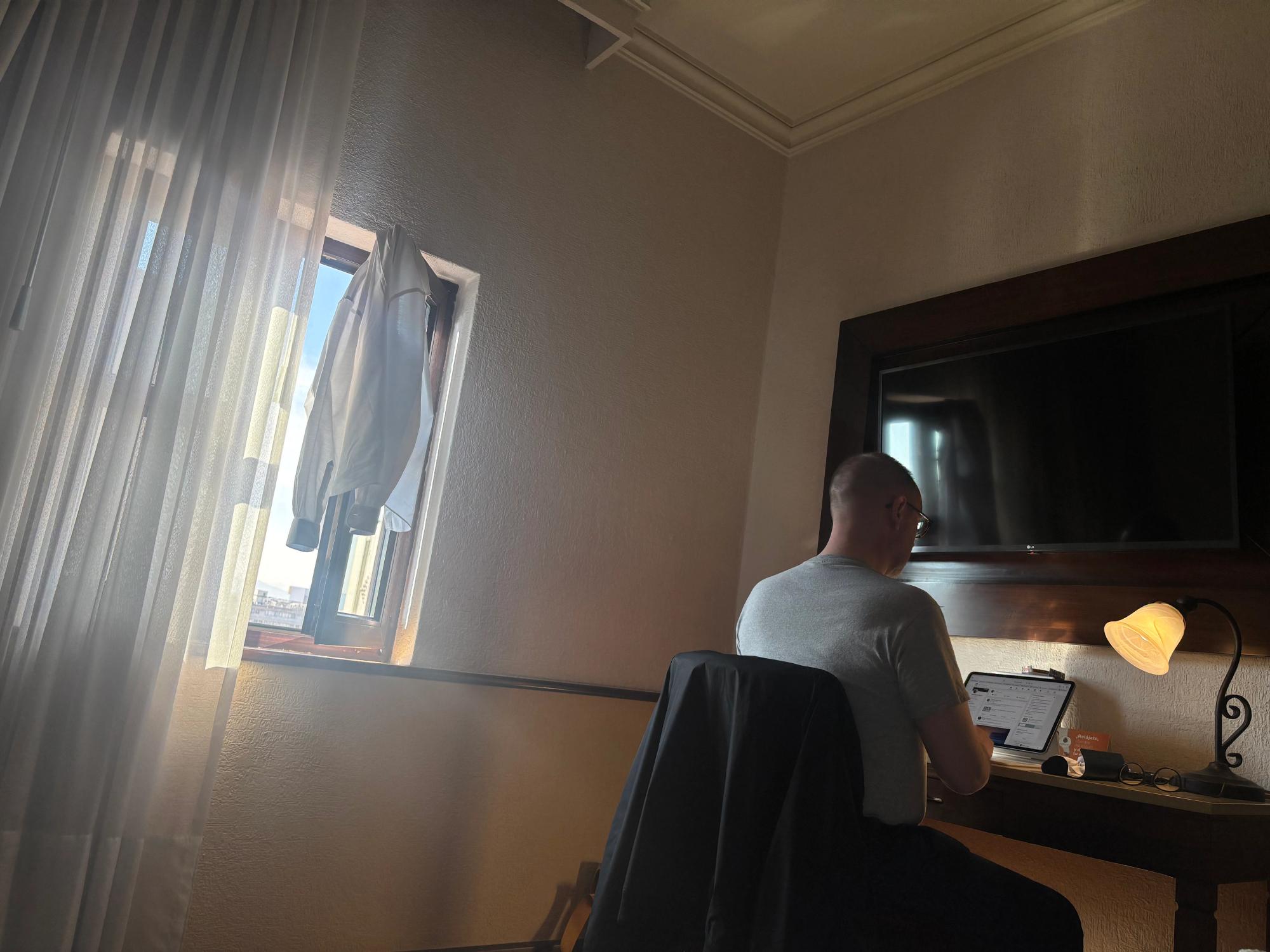
I was trying very hard not to make a mus, so naturally I managed to splash red chile on myself. Back at the hotel I tried to scrub the stain out, but failed. I dropped my shirt off at the front desk to be laundered. We waited for my wife’s aunt to come and collect us for a drive out to Lake Chapala.
My wife’s aunt married a Mexican man, an architect, and has lived in Guadalajara for decades. She’s windowed now and struggles with what to do. She debates about returning to the US to be close to her family, but her life, her world is Mexico. In her 70s, she drives like a maniac, speaks grammatically perfect Spanish with a broad American accent, talks to everyone, flirts with waiters, and basically lives her very best life. She’s worked as a realtor for years and knows the city better than most taxi drivers.
She collects in her SUV and pushes her way through traffic to get out onto the highway. She drives fast. Speed limits here are merely recommendations. We’re zipping along and suddenly traffic is at a dead stop. We sit and wait. Soon people are getting out of their cars. She rolls down the window and begins asking folks what’s going on.
It is a manifestación - a demonstration. The newly widened highway has cut local vendors off from street traffic and they are suffering lost businesses. So they have blocked the highway. Cars and trucks begin inching backwards down the freeway, making room. Cars pull a hard U-turn across three lanes and go the wrong way down an on-ramp onto side streets. We zig-zag through narrow cobblestone roads back onto the main road and back into the city. How about we go to Tlaquepaque instead?
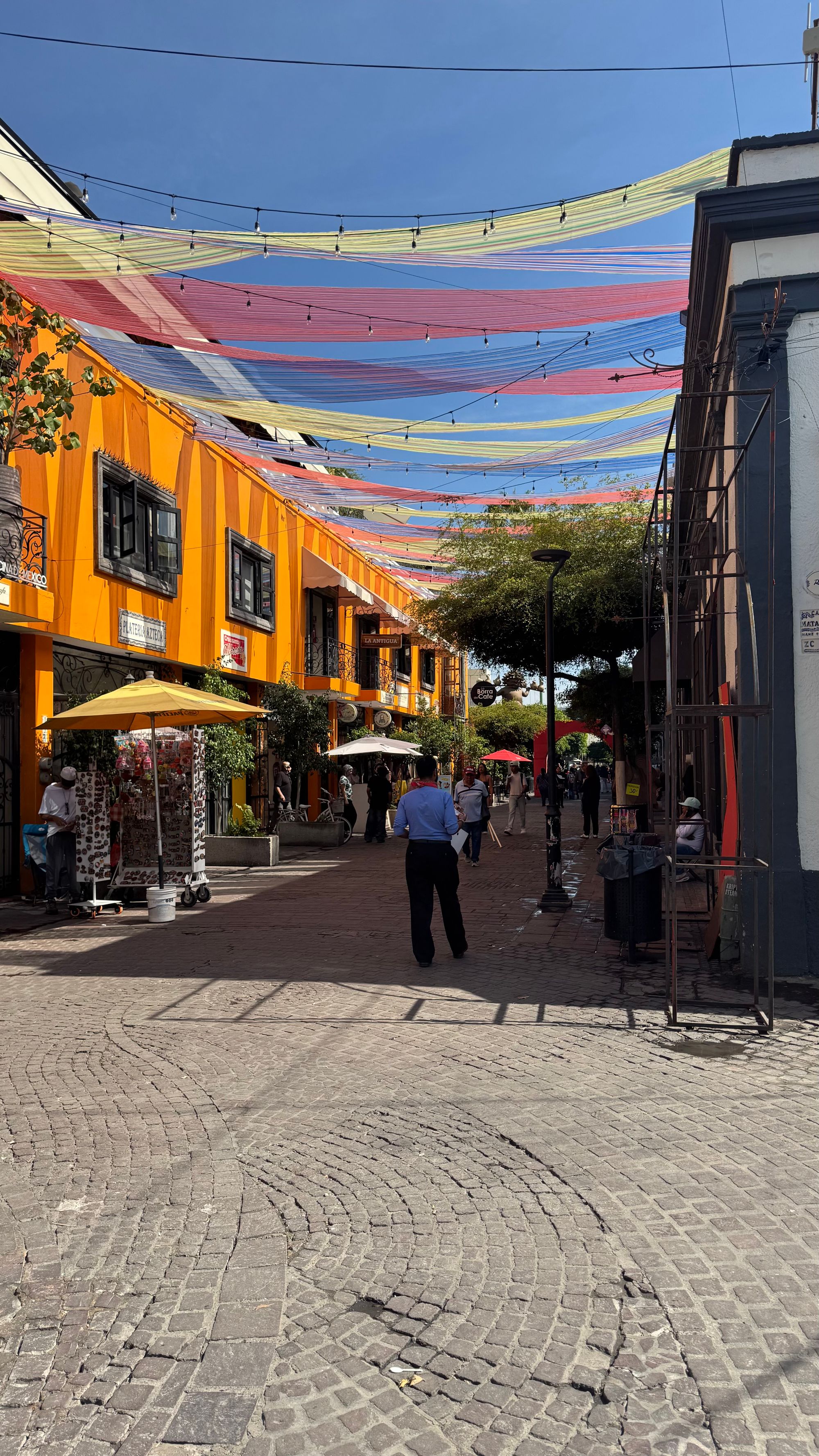
Tlaquepaque is known for arts and food. The city center is full of shops, artisans, galleries, and excellent restaurants. We wander and window shop, while my wife’s aunt talks to everyone, making friends and hearing stories. We settle for lunch a bit open patio restaurant where I get even more chapulines, this time spiced and roasted as a crunchy topping for guacamole.
We wind down the day by strolling through the city center again. Very near where we caught the train is a massive old neoclassical temple. We discover this is a library for the University of Guadalajara. In Spanish this is Universidad de Guadalajara and like we call the University of Oregon “U of O” - in Guadalajara the University is U de G - which is pronounced like Ooo-day-hey in Spanish. The temple library has many heavy wooden desks with students quietly working and two stories of books lining the walls. Above the books are murals by Amado de la Cueva. His name translates to “beloved of the cave” which is pretty cool. He worked with Diego Rivera but died tragically young in a motorcycle accident.
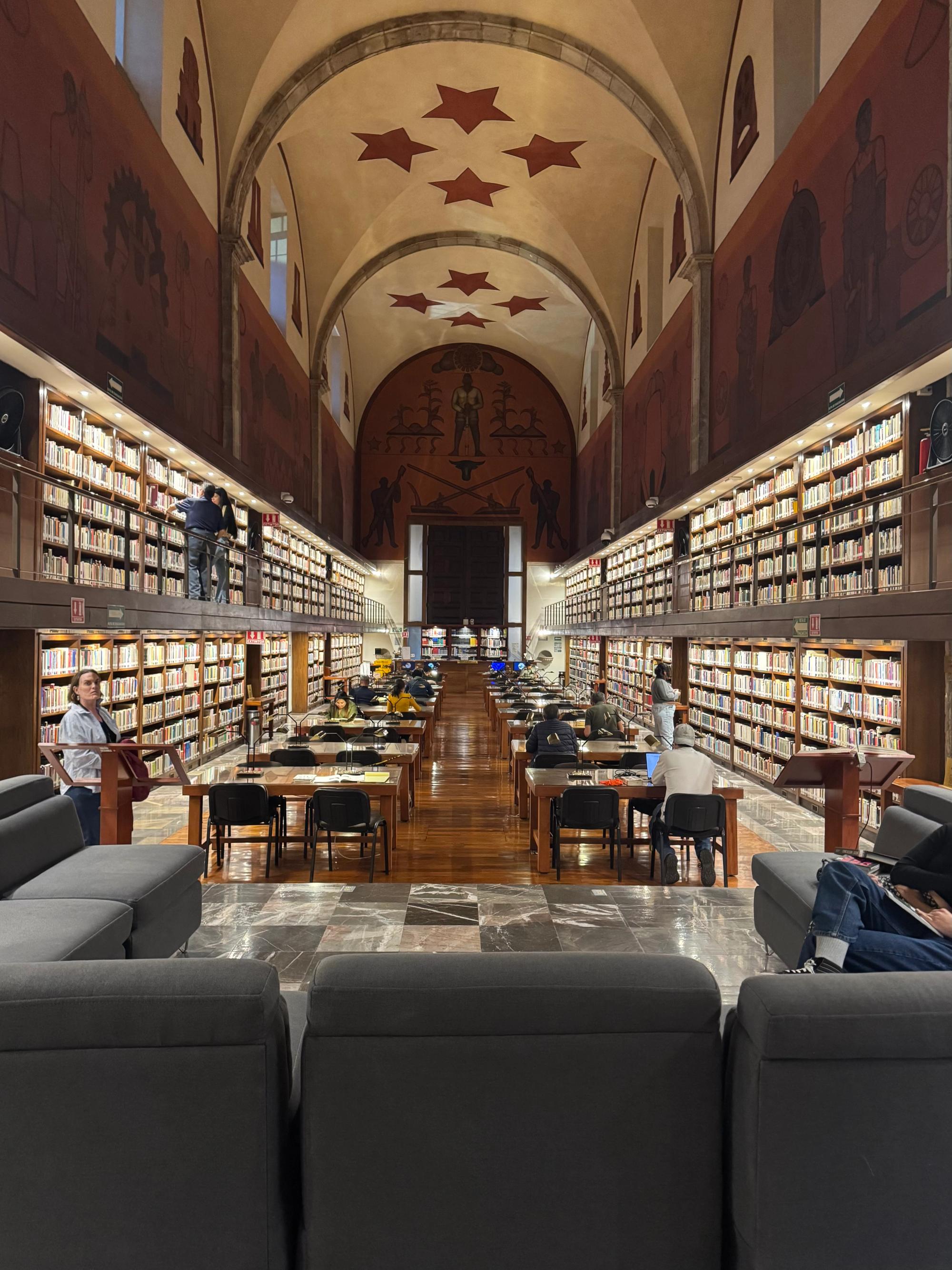
One day, when I when I win the lottery and become an insane millionaire, I want to fund a documentary series about all of these Mexican muralists and their crazy lives.
The following day we had already planned to visit Tlaquepaque and have lunch with one of the chicas. Why not? Tlaquepaque is great. We wanted to do some site-seeing before lunch so we caught a cab out to the la Minerva - a grand statue of Minerva (or Athena if you prefer the Greek original over a shoddy Roman copy) - she stands in the center of a fountain, with her spear, helmet, and shield protecting the city. The Minerva has native features, a broad nose and full lips. She blends Mexico’s past with myth and legend. Her shield features the face of the gorgon, Medusa, as is traditional.
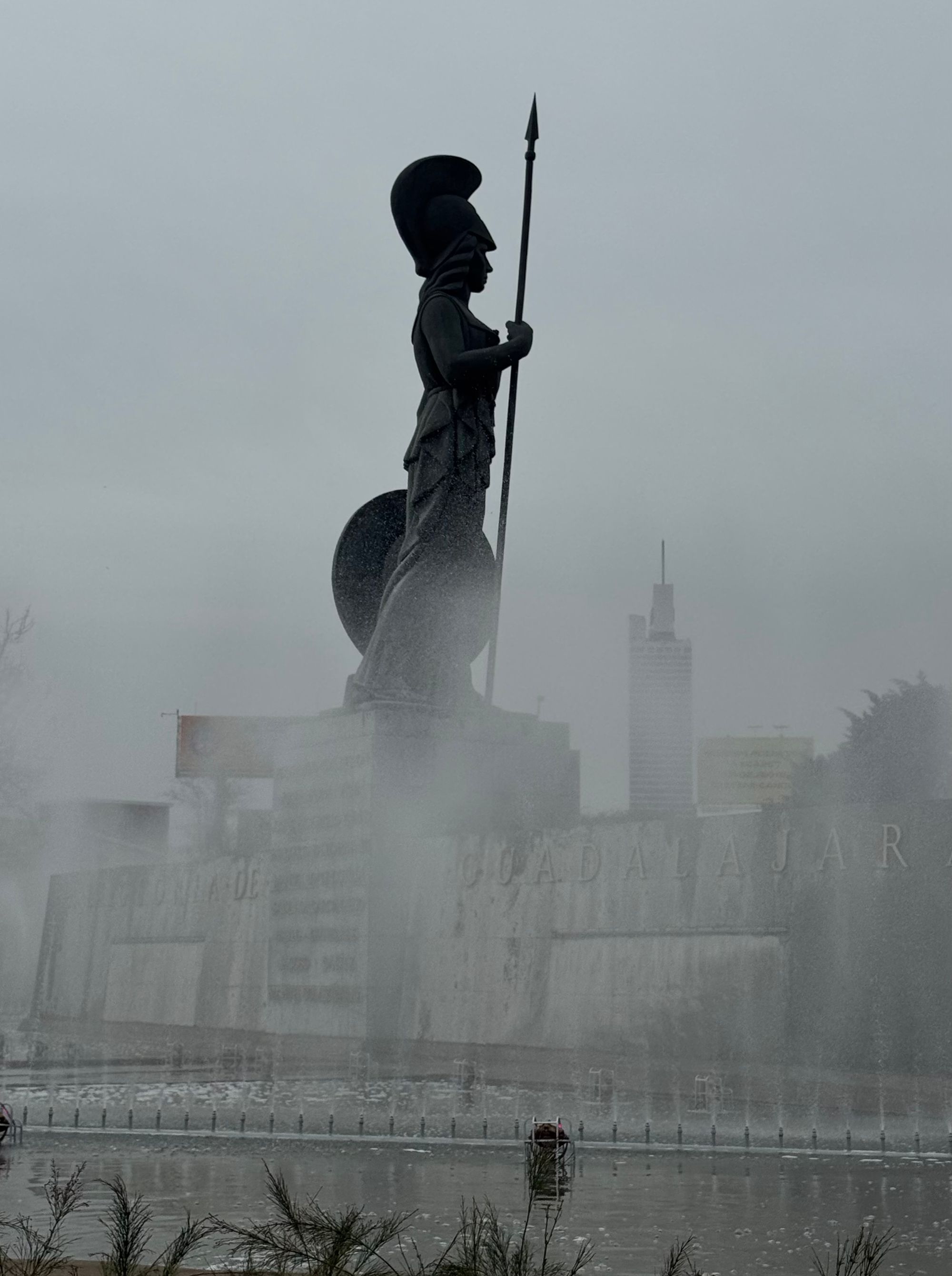
Minerva is a sort of personal saint for my wife. We joke that if she were to take up roller derby, her stage name would be Minerva Damage. The statue is awesome. I sent a photo to a buddy. His response: “who is she?”.
Minerva’s fountain is in the center of a huge roundabout, fronted by giant yellow arch. The surrounding neighborhood is affluent, tree-lined, well landscaped, and beautiful. I think most Americans would be surprised at how lush Mexico is. I think our popular imagination is border towns with rough banditos. On one end of the eastern compass point of this roundabout is a small park with some old modern homes. One home belonged to José Clemente Orozco. Now it’s a sort of museum or cultural center. It’s not quite clear. When we walk inside it’s clear that, at the moment, the house is a house and nothing much else. Two women are needlessly cleaning the place. It’s a beautiful, white stack of brick and tile. There is one giant painting. A mural painted on big slabs of masonite with industrial paint. Orozco was innovative in his materials. The assembled painting has a funny angle on the top. Originally it lived in the kitchen of a famous restaurant, so the painting snuggled in under the slanty ceiling.
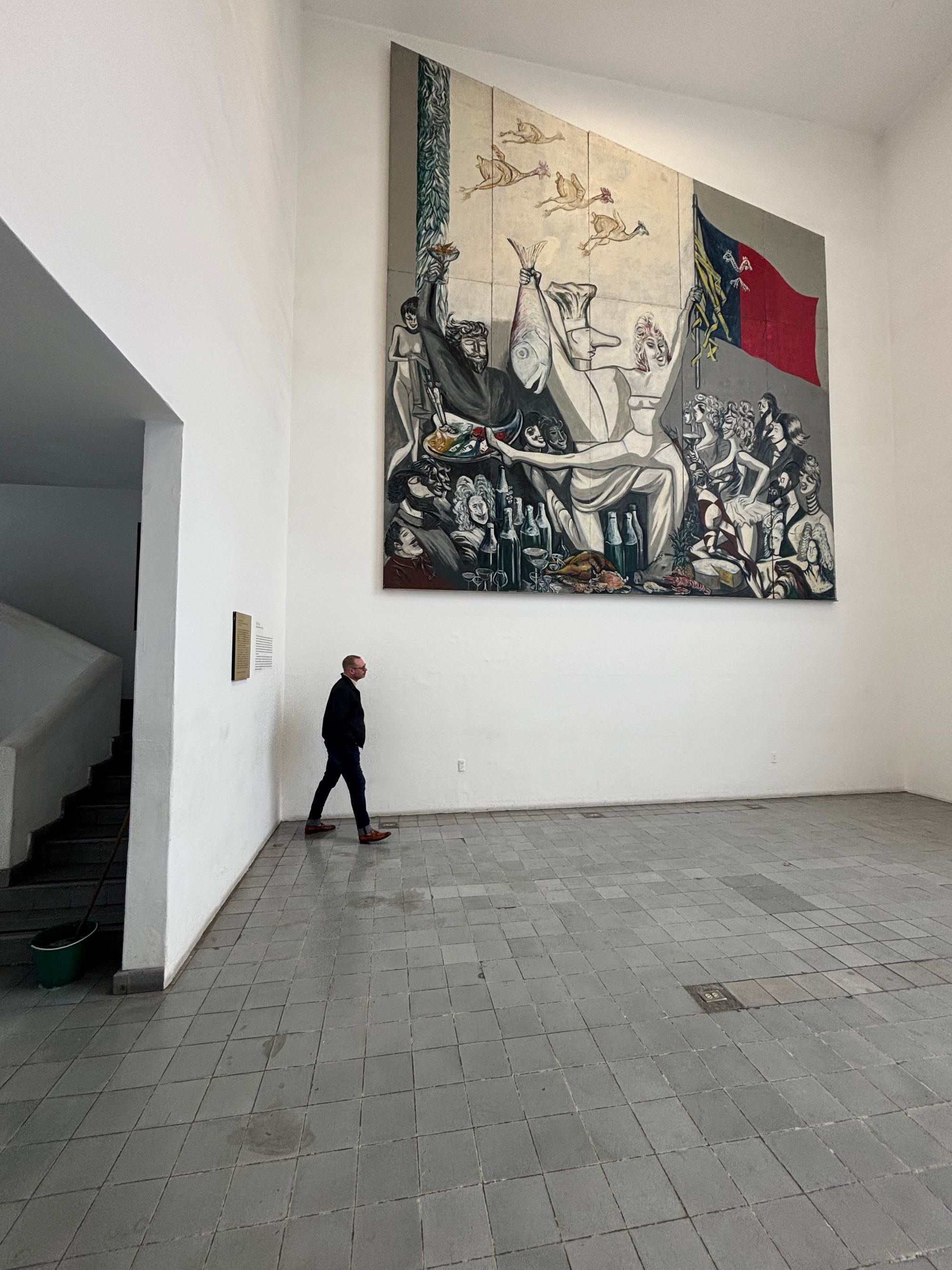
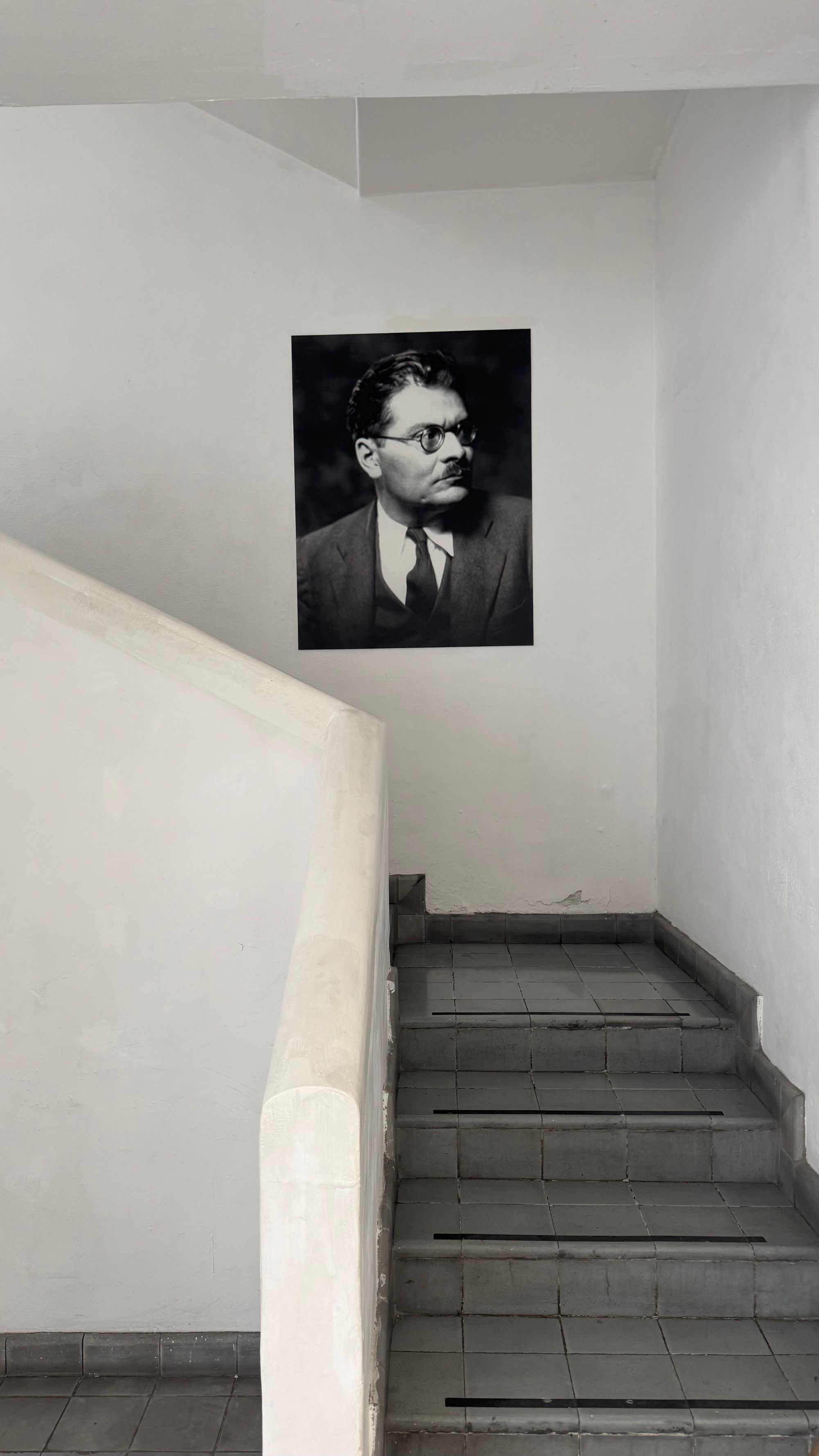
There is a barricaded staircase to the second floor. A large printed photo of Orozco glares at you, scaring away intruders.
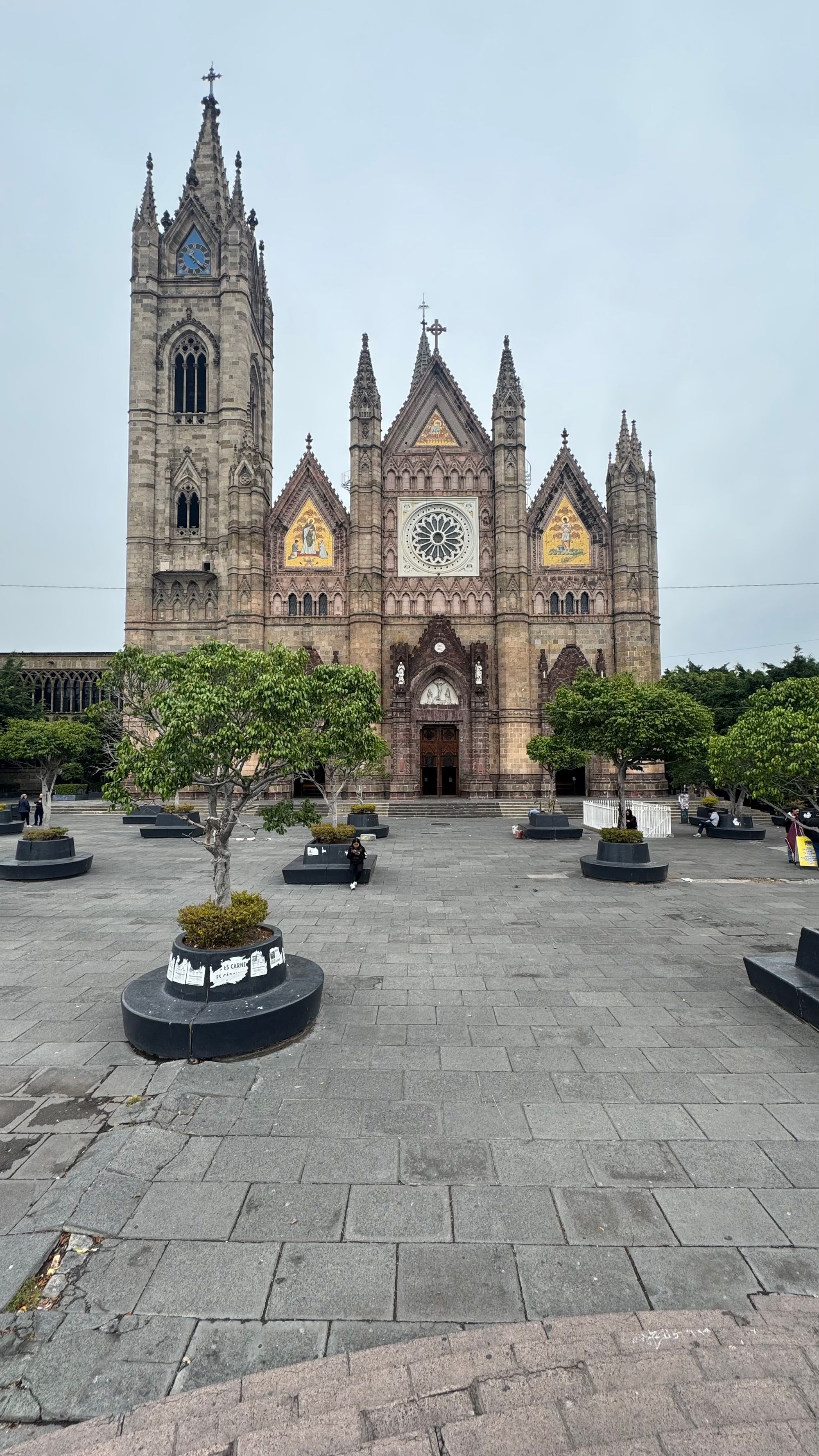
And that’s it. There is nothing more to see. We sign the guestbook and leave. There’s still time before lunch; Mexicans eat later than Americans, so we take a taxi over to the University of Guadalajara Museum of Art. We’re a little early so we cross the street, find a coffee, and sit in the plaza in front of a grand old cathedral. We wait for the clock to strike so we can see the clockwork figures emerge from the tower and announce the hour. The bells ring, but nothing happens. Robbed. But now the museum is open.
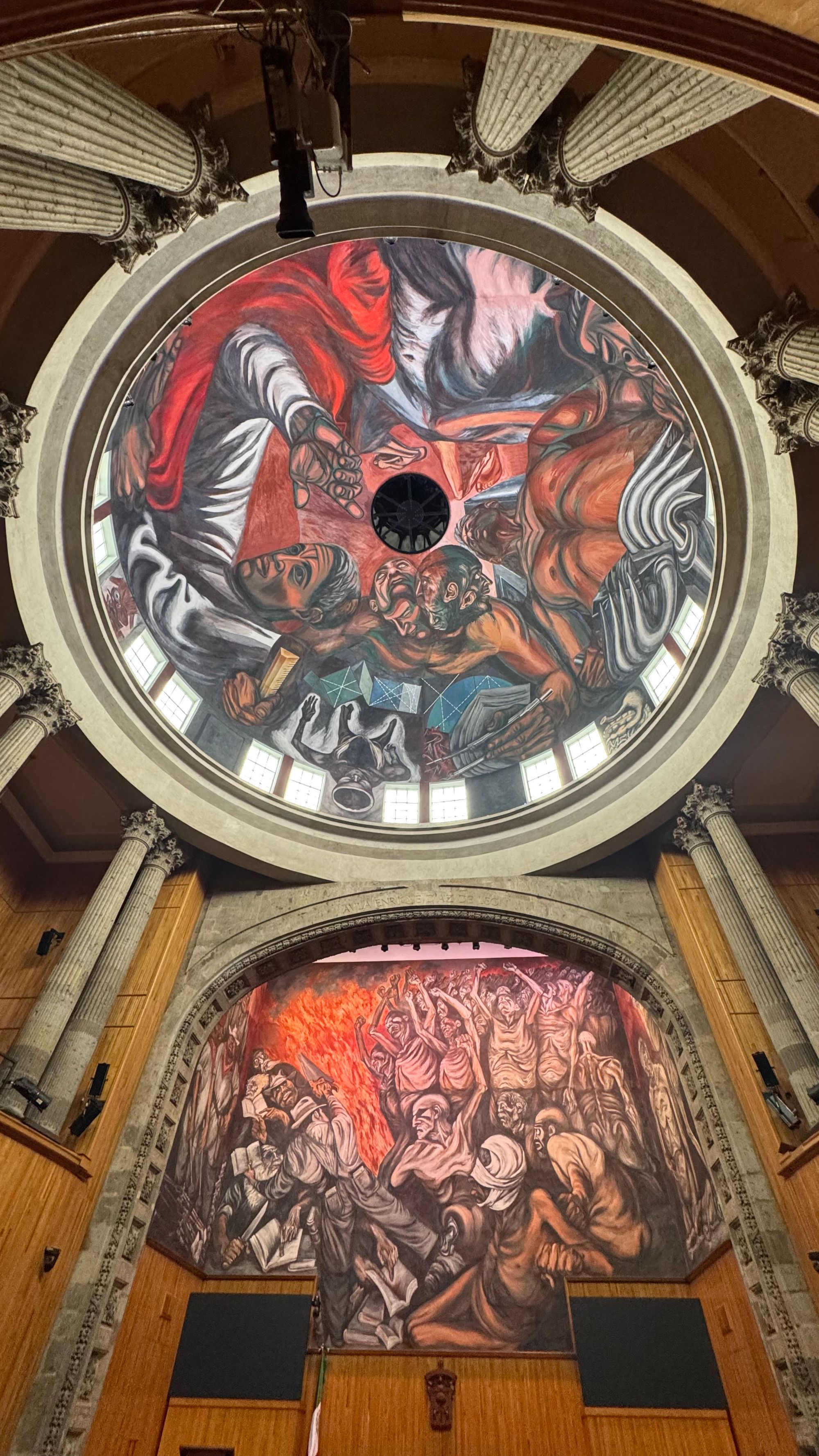
In the center of the museum is a huge, domed auditorium. This is a university museum, so this is probably where students receive their art history lessons. Beneath a vast dome, decorated with Orozco’s frescos. I think back to my undergraduate art history classes. Leaving the house before 7am to park and make my way to the physics building (for some reason) to look at slides, in the dark at 8am, in the only auditorium that was available. Somewhat less inspiring. I remember falling asleep and having strange art dreams.
After we tour the museum we’re off to Tlaquepaque again for lunch and talk for hours.
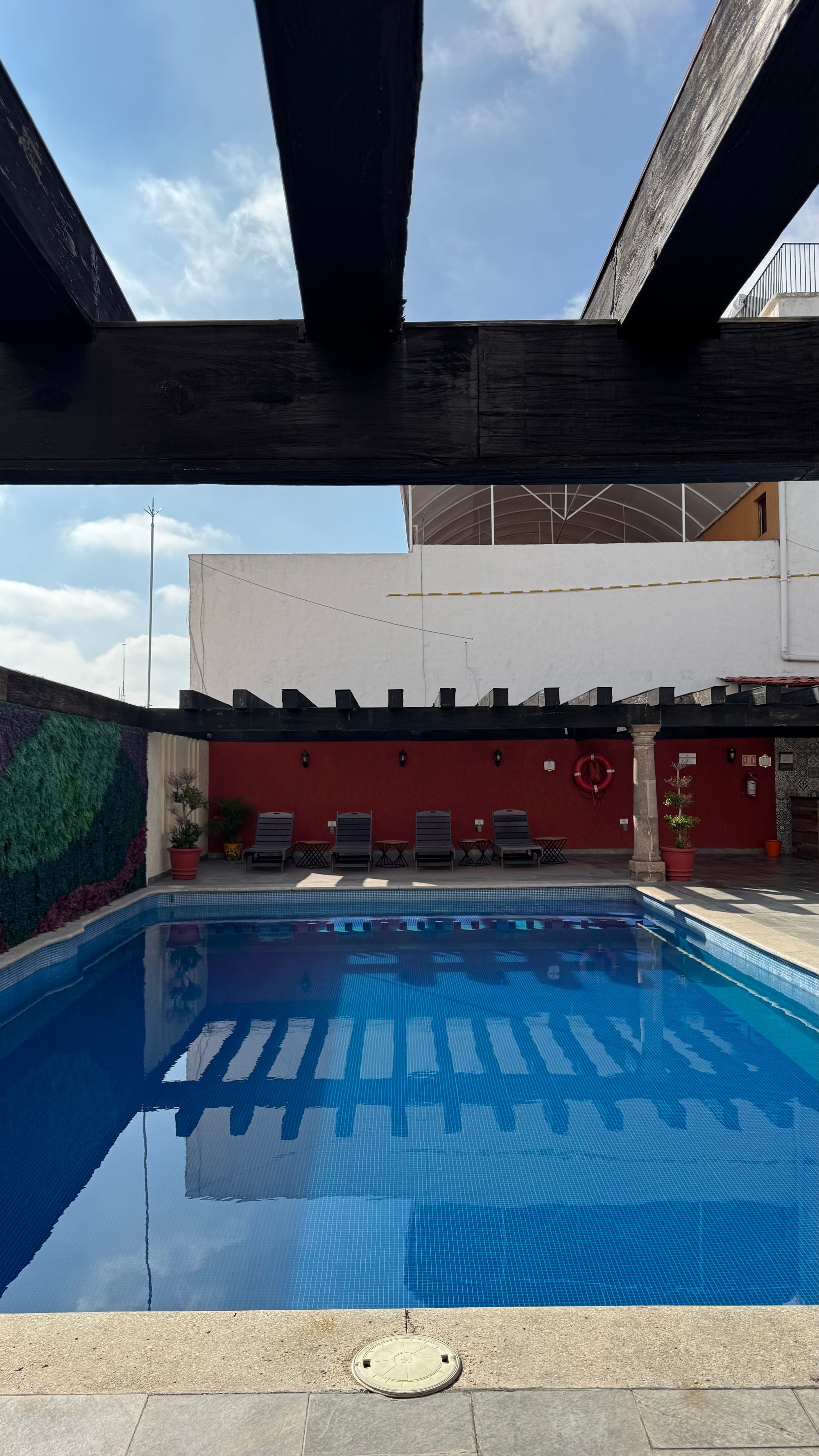
Our flight home leaves late in the day so we have time to read by the hotel pool, walk around the city and have lunch at our favorite spot. We booked the hotel van to take us back to the airport. By the time we get checked in and through security it’s close enough to dinner time that we should eat. We found ourselves having Mexican sushi at a posh little place in the newly renovated Guadalajara airport. Ready for the world.
Subscribe
New work and writing, straight to your inbox.